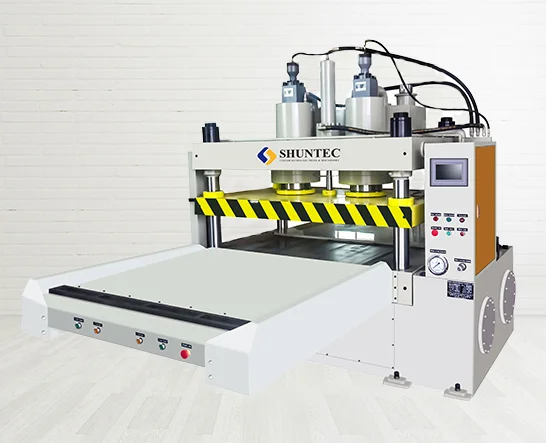
You know that sinking feeling. You’ve got a production bottleneck, a new product line launching, or a customer asking for something your current equipment just can‘t handle. So you start researching how to choose a die cutting press. And within five minutes, you’re buried under spec sheets, jargon, and marketing claims that all sound the same.
Let me save you some time.
I‘ve been around industrial die cutting for long enough to know what actually matters when you’re putting money on the table. This isn‘t a sales pitch. It’s a framework—plain language, real numbers, and the questions you should be asking before you sign anything. Whether you‘re looking at a hydraulic die cutting press for sale or weighing options from die cutting machine manufacturers in the USA, the same fundamentals apply.
What We’re Actually Talking About
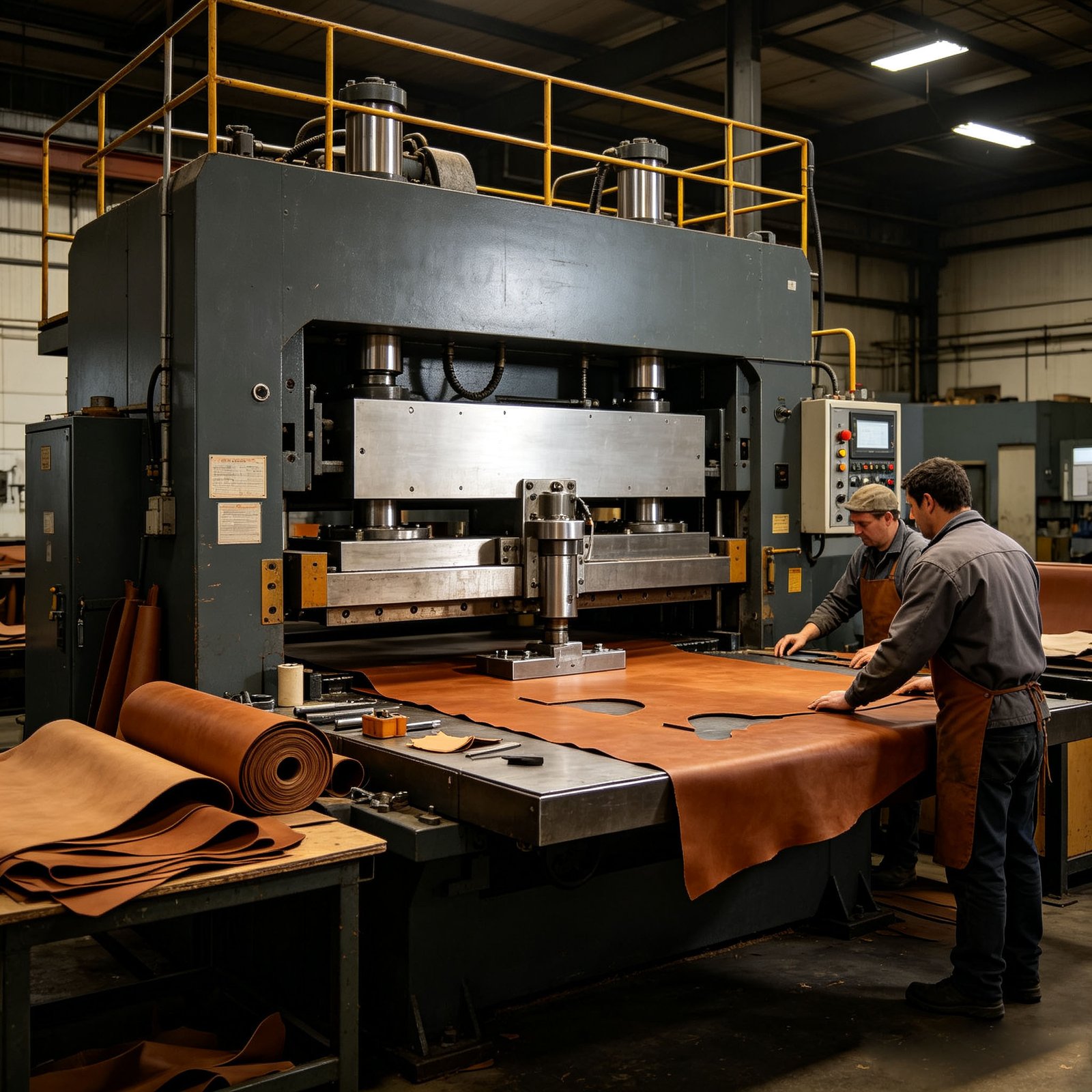
A die cutting press is simple in concept: it uses a custom-shaped cutting die to punch shapes out of materials that aren‘t too hard—leather, foam, fabric, rubber, plastics, plywood, that kind of thing. The press applies pressure, the die cuts through, and you get your part. If you’re new to this, you might start by asking what is a die cutting press used for—and the short answer is: almost anything that needs repetitive, precision cutting of low-strength materials.
Simple concept. But the machine itself? That‘s where things get complicated.
The wrong press means wasted material, frustrated operators, and a capital investment that sits there underperforming. The right press means smooth production, happy customers, and a machine that pays for itself faster than you’d expect. Die cutting press selection isn‘t just about specs—it’s about matching a machine to your real-world operation.
Here‘s how to get it right.
Start With Your Materials. Really Look at Them
People skip this step because it seems obvious. But I’ve watched buyers spec out a machine for what they‘re cutting today, only to realize six months later they need to cut something completely different, and the press can’t handle it.
So get specific.
- What‘s the exact material—not just “foam” but what type, what density, what thickness?
- Sheet or roll? This one decision narrows your options fast.
- What’s next? If you land a new client next year, what might they ask you to cut?
Here’s a rough guide I’ve used more times than I can count:
| If you’re cutting this | You’re probably looking at | Why |
|---|---|---|
| Leather, fabric, foam | Hydraulic flatbed | Adjustable pressure keeps the material from distorting |
| Rubber, gaskets | Heavy-duty hydraulic | Needs serious pressure and consistency |
| Plywood, veneer | Hydraulic flatbed | Depth control matters here |
| Plastic film | Rotary or hydraulic | Kiss cutting—partial cuts—becomes a thing |
| Paper, cardstock | Mechanical flatbed | Fast and cheap, works great |
| Labels, tape, film | Rotary | Continuous rolls, high speed |
If your operation involves die cutting machine for foam and sponge, you‘ll want a hydraulic press with fine pressure control—foam compresses easily, and too much force ruins the part. Similarly, if you’re in the market for a hydraulic die cutting machine for leather and fabric, adjustable pressure isn‘t a luxury; it’s a requirement.
I‘ll be blunt: if you’re in packaging—which is about 55 percent of the market—or automotive, or medical disposables, you‘re probably looking at a hydraulic press in the 30 to 200 ton range. That’s the sweet spot for most industrial operations. For shops that handle multiple material types, a multi-material die cutting press for workshop use can be a smarter investment than multiple single-purpose machines.
Hydraulic vs Mechanical: Stop Overthinking It
This debate comes up constantly. Let‘s settle it.
Hydraulic presses use fluid to generate force. The big advantage? You get full tonnage throughout the entire stroke. Not just at the bottom. So if you’re cutting something thick or layered, the pressure stays consistent from start to finish. You can also dial the pressure up or down depending on the job.
The trade-off: they‘re slower. And they need more maintenance—seals, pumps, fluid changes.
Mechanical presses use a flywheel and crank. They’re simpler and faster. If you‘re running paper or cardboard all day, every day, mechanical is hard to beat.
But here’s the catch: the pressure is fixed. What you set is what you get. If your material varies even a little, you‘re going to have problems. This is why many shops ultimately compare hydraulic vs mechanical die cutting press options side-by-side before committing.
Who should buy what:
- Go hydraulic if your materials change, your thickness varies, or you’re cutting anything heavier than paper.
- Go mechanical if you‘re running the same thin material, same thickness, day in and day out, at high speed.
And if you’re wondering how much does a die cutting press cost, the range is wide—from under $1,000 for basic units to over $100,000 for fully automated industrial systems. Most mid-range industrial die cutting machine options fall somewhere in between, and the price difference between hydraulic and mechanical is often less than you‘d think when you factor in capability.
Flatbed vs Rotary: This One Actually Matters
A lot of buyers get stuck here. The decision isn’t really about which is “better.” It‘s about what fits your operation.
Flatbed presses work like a stamp. The material sits flat, the die comes down vertically, and you get a cut. Tooling is cheaper—steel rule dies don’t cost a fortune. Changeover is faster. You can handle thicker, stiffer materials. If you‘re specifically looking for a flatbed die cutting press for folding cartons, this is your category—folding cartons require the precision and creasing accuracy that flatbed systems deliver.
The downside: slower throughput.
Rotary presses use cylindrical dies rolling continuously. They’re built for speed—think labels, flexible packaging, high-volume film work. But the dies are expensive. Setup takes longer. And you‘re basically locked into running long production runs to make the economics work.
The decision is actually simple:
- Flatbed if you’re cutting sheets, changing dies often, or running thick materials.
- Rotary if you‘re running rolls, all day long, with minimal changeovers.
For most packaging and general manufacturing operations, the flatbed vs rotary die cutting question resolves to flatbed—it’s more versatile, more forgiving, and easier to tool up for short-to-medium runs.
Don‘t Overbuy Capacity. Seriously
I’ve seen it happen more times than I want to admit: a shop buys a press that can handle twice their current volume, thinking they‘ll grow into it. Then they spend years paying off a machine that’s underutilized.
Here‘s a rule of thumb that works:
| Monthly volume | What to consider |
|---|---|
| Under 5,000 sheets | Manual or semi-automatic is fine |
| 5,000 to 50,000 sheets | Semi-automatic hydraulic flatbed |
| Over 50,000 sheets | Fully automatic, maybe rotary |
Whatever number you land on, add 20 percent for growth. Not 100 percent. Twenty.
And don’t trust the rated speed on the spec sheet. That‘s measured under perfect conditions with perfect materials. Your real-world throughput will be lower. Ask current users what they actually get. If you’re running a smaller operation, you might want to research best die cutting press for small business options—they often offer the right balance of capability and cost without the overhead of enterprise-grade equipment
Precision Matters More Than You Think
Tolerances aren‘t just engineering details. They hit your bottom line directly.
Here’s what I mean. If you‘re cutting packaging that needs to fold and seal properly, ±0.1mm might be fine. If you’re doing electronics components or medical parts, you need ±0.01mm. That‘s a tenfold difference, and it changes the machine you buy.
For printed materials, registration accuracy—how well the cut lines up with the printed design—is make-or-break. Hydraulic flatbeds tend to win here because the pressure is more consistent across the whole sheet.
One thing I always recommend: Don’t take the supplier‘s word for it. Send them your actual materials. Have them cut samples at full production speed. Measure everything. If they won’t do this, move on. When you‘re evaluating options, ask specifically about die cutting machine tonnage calculation—understanding the force you need is the first step to getting the precision you require.
Automation: Where the Real ROI Lives
Here’s what‘s happening in the industry right now. Labor is getting harder to find and more expensive. Skill gaps are widening. And buyers are waking up to the fact that a machine that reduces operator dependence pays for itself faster than anything else.
The automatic segment already holds about 60 percent of the market, and it’s growing faster than manual or semi-automatic.
Features that actually make a difference:
- Automatic feeding—fewer hands on the machine
- Automatic stripping—no one standing there pulling waste
- Automatic stacking—cuts downstream handling
- Touchscreen controls with clear interfaces—less training time
- Remote diagnostics—your service call turns into a phone call instead of a site visit
If you‘re in a high-wage market like Western Europe or North America, automation isn’t optional anymore. It‘s the difference between competing and struggling. An automatic die cutting machine for packaging can dramatically reduce labor costs while improving consistency—and that’s before you factor in the reduction in scrap.
The Cost That Most Buyers Miss
Everyone focuses on the purchase price. That’s natural. It’s the biggest check you’ll write.
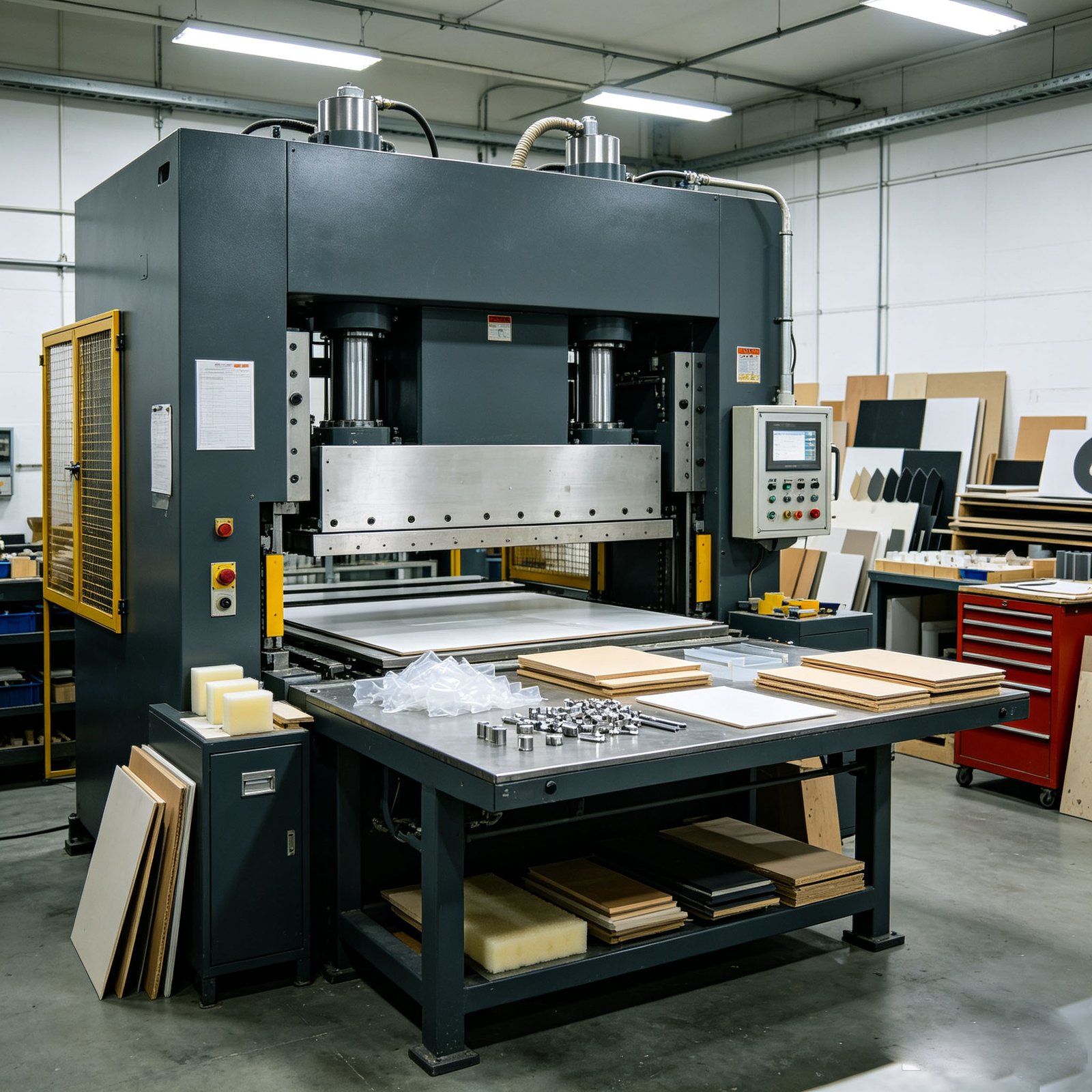
But here’s the number that matters more: what the machine actually costs you over five years. Purchase price is usually only about 20 to 30 percent of that picture.
Let me give you a real example.
A few years back, a packaging shop I know was choosing between two hydraulic presses. Machine A was cheaper—about $18,000. Machine B cost $24,000. Same tonnage, similar specs on paper. The owner nearly signed for Machine A.
Then he ran the numbers.
Machine A used about 15 percent more energy per hour. Its seals needed replacing every 18 months instead of every 30. And the dies? They wore out about 20 percent faster because the pressure wasn’t as consistent across the platen.
Over five years, Machine A cost him almost $9,000 more to operate than Machine B. The cheaper machine ended up being the more expensive one.
Here’s what actually eats into your budget:
- Tooling. Steel rule dies last 50,000 to 80,000 cuts. Rotary dies go over 300,000 but cost a lot more to replace. Either way, you’re buying them regularly. Some machines are harder on dies than others—worn guides, inconsistent pressure, sloppy registration. That adds up fast.
- Energy. Hydraulic presses aren’t all equally efficient. Some have better pump designs, better insulation, better standby modes. If you’re running two shifts, the difference between a machine that draws 7.5 kW and one that draws 9 kW is real money on your utility bill.
- Maintenance. Seals wear out. Hydraulic fluid gets changed. Pumps need rebuilding. One supplier in Germany told me their customers budget roughly 3 to 5 percent of purchase price annually for maintenance. On a $20,000 press, that’s $600 to $1,000 a year. On a $100,000 machine, it’s $3,000 to $5,000. Some machines need less. Some need more. Ask before you buy.
- Downtime. This one’s harder to put a number on, but it’s usually the biggest cost of all. What’s an hour of stopped production worth to you? For a packaging line feeding a downstream assembly operation, it can be thousands of dollars. A machine that’s reliable and easy to service saves you money every time it keeps running when another one wouldn’t.
- Floor space. Bigger machines take up more room. If you’re tight on factory floor, a more compact design might save you from expanding your facility. That’s not nothing.
Here’s a simple way to think about it.
Pull out a spreadsheet. Put two machines side by side. For each one, estimate:
- Purchase price
- Installation and rigging
- Annual energy cost
- Annual maintenance cost (parts and labor)
- Tooling cost per year (based on your expected volume)
- Downtime cost (estimate conservatively—better to be realistic than optimistic)
Run it out five years. Add it all up. Subtract any resale value at the end if you want to be thorough.
The machine that looks cheaper on day one rarely looks cheaper on day 1,825.
One more thing: if you’re comparing a hydraulic press to a pneumatic one—which comes up sometimes for lighter applications—don’t just look at the sticker. Die cutting press cost vs pneumatic is a real comparison, but pneumatic systems often need an air compressor upgrade to run them. Factor that in. It changes the math.
The buyers who come out ahead are the ones who ask suppliers for real-world energy consumption data, maintenance schedules, and references they can call to verify it all. Not marketing brochures. Actual numbers from actual shops.
If a supplier can’t give you that, it’s worth wondering why.
Your Supplier Is Part of the Equipment
This sounds obvious, but I’ve watched buyers obsess over specs and completely neglect the company behind the machine.
Here‘s what I look for:
- Certifications. ISO 9001 tells you they have quality systems. CE tells you it’s legal in Europe. These aren‘t just stickers. If you’re sourcing from overseas, finding die cutting machine manufacturers with CE certification should be non-negotiable.
- Track record. How long have they been building these machines? What‘s their installed base?
- Service. Where’s the spare parts warehouse? How fast can they ship a replacement pump?
- References. Talk to other buyers. Ask about reliability. Ask about support. Ask what they wish they‘d known.
A good supplier will let you visit the factory. A great one will encourage it. If you’re in the market for a heavy duty die cutting machine for thick materials, you especially want a supplier who understands the stresses involved and has the engineering chops to back it up.
A Quick Checklist Before You Decide
Print this. Use it.
- Does it handle my primary material? What about secondary materials?
- Is the capacity right for my actual volume, plus 20 percent?
- Can it consistently hit my tolerance requirements?
- What automation features reduce labor dependence?
- What‘s the five-year total cost—not just purchase price?
- Does the supplier have ISO, CE, or other relevant certifications?
- Have I seen sample cuts on my own materials?
- What’s the spare parts availability and response time?
- Is operator training included?
- What does the warranty actually cover?
One Last Thought
One question before you go: five years from now, will this machine be the one you’re glad you bought, or the one you wish you’d skipped?
That’s really what this comes down to.
The specs will blur. The prices will shift. But the quality of your decision won’t. Take the extra week. Do the extra test. Make the extra call.
You’re not buying a machine. You’re buying five to ten years of production—and the peace of mind that comes with knowing you got it right.