
Introduction
The quality of a jigsaw puzzle depends heavily on the materials used during manufacturing. While artwork and design attract consumers, the cardboard, paperboard, surface paper, laminating films, and protective coatings ultimately determine how durable, attractive, and enjoyable a puzzle will be. Poor material choices can lead to bent pieces, surface peeling, fading colors, and a shorter product lifespan, while high-quality materials help create a premium puzzle experience.
For puzzle brands, OEM manufacturers, purchasing managers, and material sourcing teams, understanding the characteristics of different puzzle materials is essential when developing new products or selecting production partners. Factors such as board thickness, density, surface finish, moisture resistance, and sustainability all influence product performance and manufacturing costs.
Modern puzzle production relies on carefully selected material combinations to achieve the right balance between durability, print quality, customer expectations, and budget requirements. In addition to choosing suitable materials, manufacturers also rely on appropriate puzzle manufacturing equipment to maintain consistent quality throughout production. This guide explores the most common materials used in puzzle manufacturing and how they impact the final product.
Why Material Selection Matters in Puzzle Manufacturing
The Relationship Between Materials and Puzzle Quality
Material selection directly influences the overall quality of a puzzle. High-quality board materials provide stronger puzzle pieces that resist bending, cracking, and edge damage during repeated use. Surface materials also affect print clarity, color vibrancy, and the visual appeal of the finished product. Even a well-designed puzzle can appear low quality if inferior materials are used.
How Materials Affect Production Costs
Raw materials represent a significant portion of puzzle manufacturing costs. Thicker boards, premium papers, specialty laminates, and advanced coatings typically increase material expenses. However, cheaper materials may result in higher defect rates, reduced customer satisfaction, and increased product returns. Manufacturers must balance quality requirements with target production budgets to achieve optimal profitability.
Material Choices Across Different Puzzle Categories
Different puzzle categories often require different material specifications. Children’s puzzles generally use thicker and more durable boards to withstand frequent handling. Educational puzzles prioritize durability and safety, while standard consumer puzzles focus on achieving a balance between cost and performance. Premium and collector-grade puzzles often incorporate higher-density grey board, specialty surface papers, and enhanced finishing materials to create a more luxurious user experience.
Selecting the right material combination is therefore not simply a sourcing decision. It is a strategic factor that affects product positioning, manufacturing efficiency, customer satisfaction, and long-term brand reputation within the highly competitive puzzle market.
Common Cardboard Materials Used in Puzzle Manufacturing
Cardboard forms the structural foundation of most jigsaw puzzles. The type of cardboard selected affects puzzle strength, durability, printing performance, and overall product quality. Manufacturers typically choose materials based on the intended market segment, production budget, and customer expectations.
Recycled Cardboard
Recycled cardboard is widely used in puzzle manufacturing due to its cost efficiency and environmental benefits. Made from recovered paper fibers, it helps reduce raw material consumption and supports sustainability initiatives. Many mass-market puzzles utilize recycled board because it offers an acceptable balance between performance and affordability. However, the quality of recycled materials can vary depending on fiber consistency and processing standards.
Virgin Fiber Cardboard
Virgin fiber cardboard is produced from newly processed wood pulp rather than recycled fibers. This material generally provides greater structural strength, improved consistency, and a smoother surface. Puzzle manufacturers often choose virgin fiber board when producing premium products that require enhanced durability and high-quality printing results. The uniform fiber structure also helps maintain dimensional stability over time.
Multi-Layer Cardboard Structures
Many puzzle manufacturers use multi-layer cardboard constructions to improve rigidity and product lifespan. These materials consist of several bonded layers that create a thicker and more stable board. Multi-layer structures can better withstand repeated assembly and disassembly while reducing the risk of warping or edge damage. They are particularly common in higher-end puzzles and large-piece formats.
Industrial Material Selection Criteria
When evaluating cardboard materials, manufacturers consider several important factors. Thickness influences puzzle feel and durability, while density affects piece strength and resistance to deformation. Surface smoothness is critical for achieving sharp print quality and effective lamination. Consistency between production batches is equally important, especially for large-scale OEM orders where uniform quality must be maintained across thousands of units.
To better understand how these materials are transformed into finished puzzle products, manufacturers and buyers can also explore the broader puzzle manufacturing process, including how board materials are prepared before final puzzle production.
Grey Board vs Chipboard: Which Material Is Better for Puzzles?
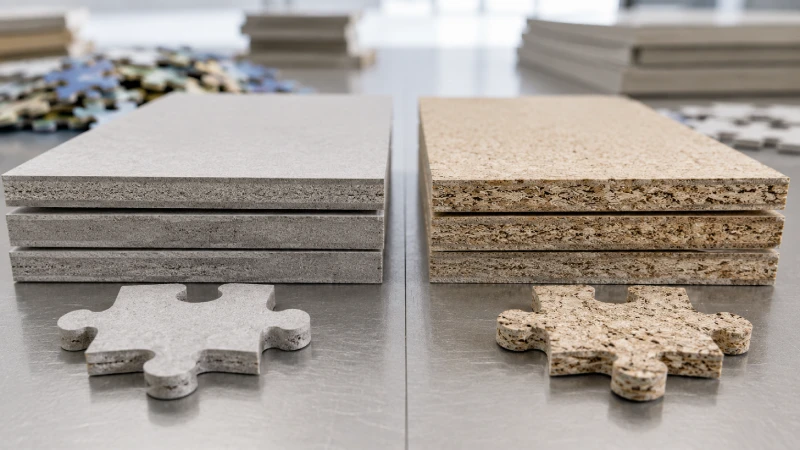
Grey board and chipboard are two of the most commonly used core materials in puzzle manufacturing. While both are paper-based boards, they differ significantly in density, strength, appearance, and overall performance. Understanding these differences helps puzzle brands and sourcing teams choose the most suitable material for their target market.
What Is Grey Board?
Grey board is a dense paperboard manufactured primarily from recycled paper fibers. It is known for its rigidity, excellent compression strength, and stable structure. Because of its higher density, grey board is widely used in premium jigsaw puzzles that require durable pieces and a more substantial feel. The material also performs well when paired with high-quality surface papers and protective finishes.
What Is Chipboard?
Chipboard is a lighter and generally less dense paperboard produced from recycled paper materials. It is commonly used in cost-sensitive puzzle products where affordability is a primary concern. Chipboard can still provide acceptable performance for standard consumer puzzles, but it may offer lower resistance to bending and wear compared to higher-density grey board.
Key Differences Between Grey Board and Chipboard
| Feature | Grey Board | Chipboard |
|---|---|---|
| Density | Higher | Lower |
| Strength | Excellent | Moderate |
| Durability | High | Medium |
| Cost | Higher | Lower |
| Premium Feel | Strong | Limited |
| Print Support | Excellent | Good |
Which Material Is Preferred for Premium Puzzles?
For premium puzzles, grey board is generally the preferred choice. Its higher density helps maintain puzzle piece integrity during repeated assembly and disassembly, while its structural stability supports better long-term performance. Many high-end puzzle brands use grey board because it delivers a more satisfying tactile experience and contributes to a stronger perception of product quality.
Chipboard remains a practical option for budget-friendly puzzle lines, but manufacturers targeting premium retail markets often view grey board as the superior material investment.
Surface Paper Materials Used for Puzzle Printing
While the board material provides structural strength, the surface paper largely determines a puzzle’s visual quality. The paper layer serves as the printing surface for artwork, photographs, illustrations, and branding elements. Selecting the right surface paper is essential for achieving sharp image reproduction, accurate colors, and an attractive finished appearance.
Art Paper
Art paper is one of the most commonly used surface materials in puzzle manufacturing. Its smooth and uniform surface allows high-resolution graphics to be reproduced with excellent clarity and detail. Art paper supports vibrant color printing, making it particularly suitable for puzzles featuring complex artwork, landscapes, and photographic images. Many commercial puzzle manufacturers use art paper as their standard printing surface.
Coated Paper
Coated paper includes a specially treated surface layer that enhances print performance. The coating helps prevent excessive ink absorption, resulting in sharper images and more consistent color reproduction. Coated papers are often selected when manufacturers want to achieve a cleaner and more polished appearance while maintaining production efficiency.
Specialty Papers
Premium puzzle brands sometimes choose specialty papers to create a distinctive customer experience. Linen-textured papers can reduce glare and add a sophisticated tactile feel, while other decorative finishes may enhance the perceived value of the product. These materials are commonly found in collector editions, luxury puzzles, and limited-production runs.
Factors Affecting Surface Paper Selection
Several factors influence the choice of surface paper. Artwork complexity, printing requirements, target retail pricing, and overall brand positioning all play important roles. Manufacturers must also consider how the paper interacts with lamination and coating processes that may be applied later.
A well-chosen surface paper not only improves visual appeal but also contributes to the overall durability and premium feel of the finished puzzle.
Lamination Materials Used in Puzzle Production
Lamination is commonly applied to puzzle surfaces to improve appearance, durability, and long-term performance. A thin protective film is bonded to the printed surface paper, helping shield the artwork from scratches, moisture, fingerprints, and general wear. The choice of lamination material can significantly influence both the visual presentation and perceived quality of the finished puzzle.
Why Lamination Is Applied to Puzzles
The primary purpose of lamination is protection. During assembly and repeated handling, puzzle pieces experience friction that can gradually damage printed surfaces. Lamination helps preserve image quality while increasing resistance to everyday wear. It can also improve color depth and provide a more refined finish.
Gloss Lamination
Gloss lamination is widely used in commercial puzzle production because it enhances color vibrancy and image contrast. Bright photographs, illustrations, and colorful artwork often appear more vivid under a glossy finish. This option is particularly popular for family puzzles, children’s puzzles, and products that rely on strong visual impact.
Matte Lamination
Matte lamination creates a softer, non-reflective surface that reduces glare under lighting conditions. Many premium puzzle brands favor matte finishes because they offer a sophisticated appearance and make puzzle assembly more comfortable by minimizing reflections. Matte lamination is frequently used for landscape, art, and collector-style puzzles.
Soft-Touch Lamination
Soft-touch lamination provides a velvety texture that creates a luxury tactile experience. Although more expensive than standard finishes, it is increasingly used in premium and gift-oriented puzzle products where customer experience is a key selling point.
Common Lamination Challenges
Manufacturers must carefully select lamination materials to avoid issues such as delamination, surface cracking, edge lifting, or premature wear. Compatibility between the board, surface paper, adhesive system, and lamination film is essential for ensuring long-term product durability and consistent quality.
Coating Options for Puzzle Surfaces
In addition to lamination, many puzzle manufacturers use surface coatings to improve durability, appearance, and overall product performance. Coatings are typically applied directly to the printed surface, creating a protective layer that helps resist scratches, fading, and minor moisture exposure. Compared with lamination, coatings often provide a more cost-effective finishing solution while still enhancing the quality of the finished puzzle.
Water-Based Coatings
Water-based coatings are widely used because they offer a balance between protection, cost efficiency, and environmental responsibility. These coatings produce a clear protective layer that helps preserve printed graphics without significantly altering the appearance of the puzzle. They are often preferred by manufacturers seeking more sustainable production solutions.
UV Coatings
UV coatings are cured using ultraviolet light, creating a hard and durable surface finish. This type of coating provides excellent scratch resistance and can enhance color vibrancy, making images appear sharper and more visually appealing. UV-coated puzzles are commonly used when durability and premium presentation are important product requirements.
Varnish Coatings
Varnish coatings are applied to improve surface protection while offering additional visual effects. Depending on the formulation, varnishes can create gloss, satin, or matte finishes. Some manufacturers also use spot varnish techniques to highlight specific design elements, adding a premium appearance without significantly increasing production costs.
Choosing Between Lamination and Coating
The choice between lamination and coating depends on product positioning, budget, and durability requirements. Lamination generally provides stronger protection against wear and moisture, while coatings offer a lighter and more economical finishing option. For many standard consumer puzzles, coatings provide sufficient protection. Premium puzzles, however, often combine high-quality coatings with carefully selected materials to achieve both durability and an enhanced visual presentation.
Understanding Puzzle Board Thickness and Material Specifications
Board thickness is one of the most important material specifications in puzzle manufacturing. While consumers often focus on artwork and puzzle piece count, thickness plays a critical role in durability, handling experience, and overall product quality. Manufacturers must carefully select board specifications based on target markets, product positioning, and customer expectations.
Standard Thickness Ranges
Puzzle board thickness varies across different product categories. Children’s puzzles often use thicker board materials to improve durability and make pieces easier to handle. Standard consumer puzzles typically utilize medium-thickness boards that balance strength and cost efficiency. Premium and collector-grade puzzles generally feature thicker, higher-density board constructions designed to deliver a more substantial feel and enhanced durability.
Although exact specifications vary by manufacturer, thicker boards are commonly associated with higher-quality puzzle products and improved long-term performance.
How Thickness Affects User Experience
Board thickness directly influences how puzzle pieces feel during assembly. Thicker pieces are generally easier to pick up, connect more securely, and resist bending during use. They also create a more satisfying tactile experience, which is particularly important for premium puzzle brands seeking to differentiate their products.
In contrast, thinner boards may reduce manufacturing costs but can feel less durable and may be more susceptible to edge wear over time.
Thickness vs Cost Trade-Offs
Increasing board thickness typically requires more raw material, resulting in higher production costs. Additional weight can also increase shipping and warehousing expenses. As a result, manufacturers must evaluate whether the benefits of thicker materials align with the intended retail price and market positioning of the product.
Common OEM Thickness Recommendations
For budget-oriented puzzles, moderate board thickness is often sufficient to maintain acceptable quality while controlling costs. Mid-range products generally use higher-density board materials for improved durability. Premium puzzle manufacturers frequently prioritize thicker grey board constructions to enhance product perception, customer satisfaction, and long-term brand value.
Durability Testing for Puzzle Materials
Selecting high-quality materials is only part of the puzzle manufacturing equation. To ensure long-term product performance, manufacturers often conduct durability testing on board materials, surface papers, laminations, and coatings. These evaluations help identify potential weaknesses before products reach the market and provide valuable quality assurance data for puzzle brands and OEM customers.
Compression Testing
Compression testing measures the structural strength of puzzle board materials under pressure. This test helps manufacturers determine whether the board can maintain its shape during storage, transportation, and long-term use. Higher-density materials such as premium grey board generally perform better under compression and are less likely to deform over time.
Piece Separation Testing
One of the most common quality concerns in puzzle production is layer separation. Piece separation testing evaluates how effectively the various material layers remain bonded together during repeated handling. A well-constructed puzzle should resist peeling, splitting, or delamination even after multiple assembly cycles.
Wear and Abrasion Testing
Puzzle pieces experience constant friction as users assemble, disassemble, and store the product. Wear and abrasion testing assesses the ability of printed surfaces, coatings, and laminations to withstand repeated contact. Strong performance in this area helps maintain image quality and prevents premature surface damage.
Moisture Resistance Testing
Paper-based materials naturally react to environmental humidity. Moisture resistance testing evaluates how board materials, coatings, and laminations perform when exposed to varying humidity levels. Effective moisture protection helps reduce swelling, warping, and surface deterioration, particularly during shipping and storage.
Long-Term Storage Stability
Many puzzles remain on store shelves or in warehouses for extended periods before reaching consumers. Long-term stability testing examines whether materials maintain their structural integrity, dimensional accuracy, and visual appearance over time. Manufacturers that prioritize storage stability can reduce product defects and improve customer satisfaction.
Comprehensive durability testing allows puzzle brands to select materials with greater confidence, ensuring that product quality remains consistent throughout the puzzle’s lifecycle.
Sustainability Considerations in Puzzle Material Selection
Sustainability has become an increasingly important factor in puzzle manufacturing. Consumers, retailers, and brand owners are placing greater emphasis on environmentally responsible products, prompting manufacturers to evaluate not only material performance but also the environmental impact of their sourcing decisions. Today, many puzzle brands seek materials that support sustainability goals without compromising quality or durability.
Recycled Content Usage
Recycled paperboard and cardboard are among the most widely adopted sustainable materials in puzzle production. By incorporating recycled fibers, manufacturers can reduce demand for virgin raw materials and lower overall environmental impact. Many mainstream puzzle products successfully use recycled board while still meeting durability and print quality requirements. However, manufacturers must ensure that recycled materials maintain consistent density and strength across production batches.
FSC-Certified Paperboard
Many puzzle brands now prefer FSC-certified paperboard as part of their responsible sourcing strategy. Certification from the Forest Stewardship Council (FSC) helps verify that wood-based materials originate from responsibly managed forests. For brands selling through major retailers or international markets, FSC certification can strengthen credibility and support sustainability-focused purchasing decisions.
Water-Based Coatings and Adhesives
Beyond board materials, environmentally friendly coatings and adhesives also contribute to a more sustainable product. Water-based coatings typically generate lower environmental impact compared to certain solvent-based alternatives, while modern water-based adhesive systems can provide reliable bonding performance with reduced emissions. These materials are increasingly used by manufacturers seeking greener production practices.
Balancing Sustainability and Performance
Although sustainability is important, product performance remains a critical consideration. Puzzle materials must still provide adequate strength, print quality, moisture resistance, and long-term durability. The most successful manufacturers balance environmental responsibility with practical performance requirements, selecting materials that align with both sustainability objectives and customer expectations.
For brands evaluating their overall supply chain, sustainability considerations should extend beyond the puzzle itself to include related puzzle packaging materials, helping create a more environmentally responsible product offering from production through delivery.
How Puzzle Brands Choose the Right Material Combination
Selecting the right material combination involves more than choosing a single board or surface finish. Successful puzzle brands evaluate multiple factors simultaneously, including product positioning, target retail price, customer expectations, durability requirements, and sustainability objectives. The ideal material combination often varies depending on the intended market segment.
Budget-Oriented Puzzle Products
For entry-level puzzles, manufacturers typically prioritize cost efficiency while maintaining acceptable quality standards. These products often use recycled chipboard or standard cardboard paired with coated surface paper and economical protective coatings. The goal is to deliver reliable performance at a competitive price point.
Mid-Market Retail Puzzle Products
Mid-range puzzles generally require a stronger balance between durability, appearance, and production cost. Manufacturers commonly select higher-density board materials, quality art paper, and either matte lamination or durable coating systems. This combination helps improve product longevity while maintaining reasonable manufacturing expenses.
Premium Puzzle Collections
Premium and collector-grade puzzles typically utilize dense grey board, high-quality surface papers, and advanced finishing options such as matte or soft-touch lamination. These materials enhance durability, improve tactile experience, and support a more luxurious brand image. Premium buyers often expect superior piece quality, stronger construction, and refined finishing details.
OEM Material Selection Checklist
Before finalizing material specifications, OEM buyers and puzzle brands should evaluate several key criteria:
- Required durability and expected product lifespan
- Target retail pricing and profit margins
- Sustainability goals and certification requirements
- Desired print quality and surface finish
- Customer expectations within the target market
A carefully planned material combination helps ensure that product quality, manufacturing cost, and brand positioning remain aligned.
FAQs
What material is most commonly used for jigsaw puzzles?
Most jigsaw puzzles are manufactured using a combination of paperboard, cardboard, or grey board as the core material, with printed surface paper laminated or coated for protection. The exact material combination varies depending on product positioning and target market. Standard consumer puzzles often use recycled paperboard, while premium puzzles frequently incorporate higher-density grey board for improved durability and a more substantial feel.
Is grey board better than chipboard for puzzles?
In many cases, yes. Grey board generally offers higher density, greater rigidity, and better long-term durability than standard chipboard. These characteristics help puzzle pieces maintain their shape and resist wear during repeated use. However, grey board is typically more expensive. For budget-oriented puzzle products, chipboard may still provide a practical balance between cost and performance.
What thickness is ideal for premium puzzles?
There is no universal thickness standard for premium puzzles because specifications vary among manufacturers and product categories. In general, premium puzzles tend to use thicker and denser board materials than entry-level products. The goal is to create sturdy pieces that feel substantial, resist bending, and provide a better overall user experience. Material density is often just as important as thickness when evaluating quality.
Do laminated puzzles last longer?
Lamination can significantly improve puzzle durability. By adding a protective film to the printed surface, lamination helps reduce scratches, fading, moisture damage, and general wear caused by repeated handling. Matte, gloss, and soft-touch laminations all provide protective benefits, although the ideal choice depends on the desired appearance and product positioning.
Are recycled puzzle materials durable enough?
Modern recycled materials can offer excellent performance when sourced from reputable suppliers. Advances in paperboard manufacturing have improved the consistency and strength of recycled materials, making them suitable for many commercial puzzle applications. Manufacturers often conduct durability testing to verify that recycled materials meet required quality standards before production begins.
What certifications should puzzle manufacturers look for?
Many brands prioritize FSC-certified paperboard and paper products because these certifications help demonstrate responsible sourcing practices. Depending on target markets, manufacturers may also consider environmental compliance standards related to coatings, adhesives, and packaging materials. Certification requirements often depend on customer expectations, retailer requirements, and corporate sustainability goals.
Conclusion
The materials used in puzzle manufacturing play a critical role in determining product quality, durability, appearance, and overall customer satisfaction. From cardboard and grey board to surface papers, laminations, and protective coatings, every material choice contributes to the final performance of the puzzle. Factors such as board density, thickness, surface finish, and sustainability credentials should all be carefully evaluated during product development and sourcing.
There is no single material solution that fits every puzzle category. Budget-friendly products, mid-market retail puzzles, and premium collector editions each require different material combinations to achieve the right balance between cost, durability, and user experience.
For puzzle brands, OEM manufacturers, and purchasing teams, selecting the appropriate materials is an important step toward building a competitive product. Combined with reliable puzzle manufacturing equipment, the right material strategy can help ensure consistent quality, efficient production, and long-term brand success in the growing puzzle market.
