
Introduction
As global demand for jigsaw puzzles continues to grow, manufacturers face increasing pressure to improve productivity, maintain consistent quality, and reduce labor costs. Traditional puzzle production methods often rely on manual material handling and disconnected equipment, creating bottlenecks that limit output and efficiency.
An automatic puzzle production line addresses these challenges by integrating feeding systems, conveyors, cutting equipment, and control technologies into a coordinated workflow. Instead of operating as separate machines, production equipment works together as a continuous system designed to maximize throughput and minimize downtime.
By reducing manual intervention and optimizing material flow, automated lines help factories improve production consistency, lower operating costs, and scale output more effectively. This guide explores the key components of puzzle production automation, the benefits of line integration, and the factors manufacturers should consider when investing in automated puzzle manufacturing solutions.
What Is an Automatic Puzzle Production Line?
Definition of a Puzzle Production Line
An automatic puzzle production line is an integrated manufacturing system that connects multiple production processes through automated equipment, conveyors, and centralized control systems. Instead of operating individual machines separately, the production line enables materials and semi-finished products to move continuously from one stage to the next with minimal manual intervention.
In modern puzzle factories, automation is increasingly used to synchronize feeding, material transfer, puzzle cutting, stacking, and collection operations. This coordinated workflow helps maintain stable production speeds while reducing delays caused by manual handling.
Why Automation Matters in Puzzle Manufacturing
As production volumes increase, relying on standalone equipment and manual transportation between workstations can create bottlenecks that limit factory output. Automated production lines eliminate many of these inefficiencies by ensuring a consistent flow of materials throughout the manufacturing process.
Automation also improves production consistency by reducing human errors associated with feeding, positioning, and material movement. With fewer interruptions and more predictable workflows, manufacturers can achieve higher throughput while maintaining stable product quality.
Many factories invest in automatic puzzle manufacturing machines as part of a broader automation strategy designed to improve efficiency, reduce labor dependence, and support long-term business growth.
Typical Factory Applications
Automatic puzzle production lines are commonly used by educational puzzle manufacturers, children’s puzzle producers, promotional puzzle suppliers, and OEM puzzle factories that require consistent output and scalable production capacity. They are particularly valuable for manufacturers seeking to increase production efficiency without significantly expanding their workforce.
Main Production Stages in an Automated Puzzle Line
Board Feeding and Material Preparation
The production process begins with automated board feeding systems that continuously supply puzzle boards to the manufacturing line. Rather than relying on operators to manually load materials, automated feeders maintain a consistent workflow and reduce interruptions caused by material shortages. This creates a stable foundation for the entire production line and helps maximize equipment utilization.
Printing and Surface Processing
After feeding, puzzle boards move through printing and surface processing stations. In an automated production environment, these upstream processes are synchronized with downstream equipment to maintain balanced production speeds. Automated controls help ensure that materials are transferred smoothly between stages, reducing waiting times and minimizing production bottlenecks.
Puzzle Cutting Operations
Once printed boards are ready, they enter the puzzle cutting stage. Automated transfer systems position materials accurately and move finished sheets efficiently between workstations. Because cutting often represents one of the highest-capacity operations within the line, maintaining proper synchronization between feeding, transfer, and cutting equipment is essential for achieving stable output.
Manufacturers evaluating line automation often begin by selecting suitable automatic puzzle manufacturing machines capable of integrating with broader production workflows.
Sorting and Collection
Following the cutting process, automated sorting and collection systems transport finished puzzle sheets to designated stacking or collection areas. Conveyors and automated handling equipment eliminate the need for repeated manual movement, helping maintain production continuity while reducing labor requirements.
By connecting each stage through automated controls and material transfer systems, manufacturers can create a streamlined production environment that improves throughput, reduces downtime, and supports consistent factory performance.
Automatic Feeding Systems: The Foundation of Production Efficiency
Manual Feeding vs Automatic Feeding
In traditional puzzle manufacturing environments, workers manually load boards and materials into individual machines throughout the production process. While this approach may be suitable for small-scale operations, it often leads to inconsistent production speeds, operator fatigue, and frequent interruptions. As production volumes increase, manual feeding becomes one of the most significant constraints on overall factory efficiency.
Automatic feeding systems solve these challenges by delivering materials continuously and accurately to each production stage. By reducing reliance on manual handling, manufacturers can achieve a more stable workflow and maintain higher equipment utilization rates.
Common Feeding Technologies
Several feeding technologies are commonly used in automated puzzle production lines. Vacuum feeding systems use suction mechanisms to pick and position boards with high accuracy. Magazine feeders store multiple boards and release them automatically as production progresses, reducing the need for constant operator involvement.
For higher-capacity facilities, robotic loading systems can be integrated into the production line to automate material transfer between storage areas and manufacturing equipment. These systems are particularly valuable when handling large production volumes or operating multiple shifts.
Benefits of Automated Feeding
Automated feeding provides benefits that extend beyond labor savings. Consistent material delivery helps prevent machine idle time, improves production scheduling, and reduces the risk of feeding errors. Accurate positioning also contributes to smoother downstream operations by ensuring materials enter each production stage correctly.
As a result, automatic feeding systems play a critical role in improving throughput, reducing downtime, and creating the continuous production flow required for modern automated puzzle manufacturing.
Conveyor Integration and Material Flow Management
Why Conveyor Systems Matter
A production line is only as efficient as its ability to move materials between workstations. In many traditional puzzle factories, workers manually transport boards and semi-finished products from one machine to another. This process consumes labor, increases handling time, and often creates production bottlenecks that reduce overall output.
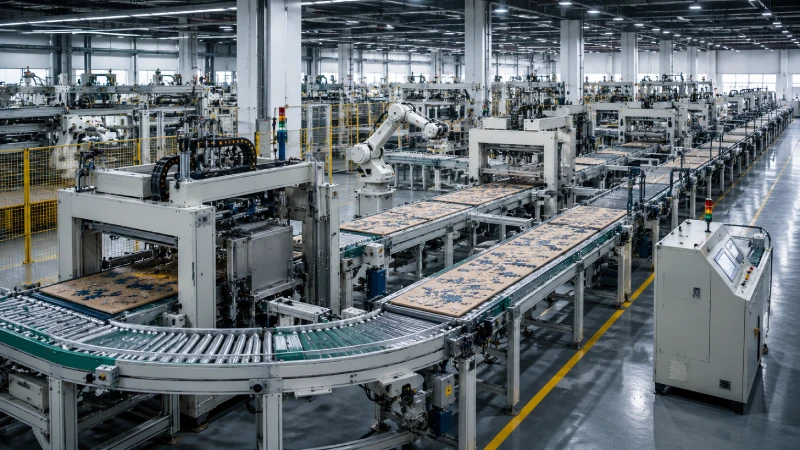
Conveyor systems eliminate these inefficiencies by providing a continuous and automated method of material transfer. By maintaining a steady flow of products throughout the factory, conveyors help ensure that each machine receives materials at the right time and in the correct sequence.
Connecting Multiple Machines into One Workflow
One of the primary advantages of conveyor integration is the ability to connect individual machines into a unified production system. Feeding equipment, printing stations, cutting machines, and collection systems can operate as part of a synchronized workflow rather than as isolated production units.
This integration reduces waiting times between processes and minimizes interruptions caused by manual handling. Automated controls can also coordinate machine speeds to ensure smooth operation across the entire line.
Reducing Material Handling Bottlenecks
Material handling is often a hidden source of production inefficiency. When operators spend time moving products between workstations, machine utilization decreases and production costs increase. Conveyor systems reduce these non-value-added activities by automating transportation tasks that would otherwise require manual labor.
Buffer zones can also be incorporated into conveyor networks to absorb temporary production fluctuations. This helps prevent upstream or downstream equipment from stopping when minor delays occur.
Creating Continuous Production Flow
By integrating conveyors, transfer stations, and automated discharge systems, manufacturers can establish a continuous production flow that supports higher throughput and more predictable factory performance. The result is a more efficient operation capable of meeting increasing production demands while maintaining consistent productivity.
Production Speed Optimization Strategies
Balancing Machine Speeds Across the Line
Achieving high productivity in an automated puzzle production line requires more than simply installing faster equipment. The overall output of the line is determined by how effectively each production stage operates together. If one machine runs significantly slower than the others, it can become a bottleneck that limits the performance of the entire system.
Successful manufacturers focus on balancing machine speeds so that material flows consistently from one operation to the next. This helps prevent excessive accumulation of work-in-progress inventory while reducing idle time across the production line.
Identifying Bottlenecks
Production bottlenecks can occur at any stage of the manufacturing process, including feeding, material transfer, cutting, or collection. Even a short delay at a single workstation can reduce overall throughput and impact delivery schedules.
Modern automation systems use sensors and monitoring software to identify bottlenecks in real time. By tracking machine performance and material flow, production managers can quickly locate inefficiencies and take corrective action before they affect overall output.
Minimizing Changeover Time
Many puzzle manufacturers produce multiple product sizes, designs, and order quantities. Frequent changeovers can reduce productivity if equipment adjustments require excessive downtime.
Automation technologies help streamline changeovers through programmable controls, automated settings, and standardized workflows. Faster transitions between production runs enable manufacturers to maintain higher utilization rates while responding more efficiently to customer demand.
Using Automation Controls for Real-Time Monitoring
Advanced control systems provide valuable production data that supports continuous improvement efforts. Metrics such as throughput, machine utilization, downtime, and Overall Equipment Effectiveness (OEE) allow manufacturers to evaluate performance objectively.
By combining line balancing, bottleneck management, rapid changeovers, and real-time monitoring, manufacturers can significantly increase production efficiency and maximize the return on their automation investment.
How Automation Reduces Labor Requirements
Labor Challenges in Traditional Puzzle Factories
Traditional puzzle manufacturing often depends heavily on manual labor for feeding materials, transporting boards between machines, stacking finished products, and monitoring production flow. While these tasks are essential, they do not directly add value to the final product. As labor costs continue to rise and skilled workers become harder to recruit, many manufacturers face increasing pressure to improve operational efficiency.
In addition, manual processes can introduce inconsistencies in production speed and increase the likelihood of human error. These challenges become even more significant as production volumes grow and customer delivery expectations become more demanding.
Tasks Commonly Replaced by Automation
One of the primary advantages of an automated puzzle production line is its ability to reduce repetitive manual tasks. Automated feeding systems can continuously supply materials without operator intervention, while conveyors and transfer systems move products efficiently between workstations.
Automation can also handle stacking, sorting, and collection processes that traditionally require multiple workers. By reducing dependence on manual material handling, manufacturers can maintain more consistent production speeds and improve overall workflow efficiency.
Reallocating Workers to Higher-Value Activities
Automation does not necessarily eliminate jobs; instead, it allows factories to allocate personnel more effectively. Employees who previously performed repetitive handling tasks can be reassigned to equipment supervision, quality control, maintenance, process optimization, and production management functions.
This shift enables manufacturers to make better use of skilled labor while improving overall operational performance.
Improving Workplace Safety
Reducing manual transportation and repetitive handling activities can also improve workplace safety. Fewer interactions with moving materials and heavy loads help minimize the risk of workplace injuries, creating a safer and more efficient production environment.
For many manufacturers, labor reduction is not simply about lowering headcount—it is about building a more productive, scalable, and sustainable operation capable of supporting long-term growth.
Semi-Automatic vs Fully Automatic Puzzle Production Lines
Choosing between a semi-automatic and a fully automatic puzzle production line is one of the most important decisions manufacturers face when upgrading their operations. The right choice depends on production volume, labor availability, investment budget, and long-term growth objectives.
Semi-Automatic Production Lines
Semi-automatic production lines combine automated equipment with manual operations. Certain tasks, such as material feeding, product transfer, or stacking, may still require operator involvement. This configuration allows manufacturers to improve productivity without making a significant upfront investment in full automation.
Semi-automatic systems are often suitable for small and medium-sized puzzle manufacturers that produce moderate volumes or frequently change product specifications. They provide a practical balance between automation and flexibility while reducing some of the labor demands associated with traditional manufacturing methods.
However, because manual intervention remains necessary at various stages, overall production speed and consistency may still be influenced by workforce availability and operator efficiency.
Fully Automatic Production Lines
Fully automatic production lines are designed to minimize manual involvement throughout the manufacturing process. Automated feeding systems, conveyor networks, material handling equipment, and centralized control systems work together to create a continuous production flow.
This approach offers significant advantages in terms of output capacity, labor efficiency, and production consistency. Manufacturers can operate at higher speeds while reducing downtime caused by manual handling and workflow interruptions.
Fully automated systems are particularly attractive for OEM manufacturers and large-scale puzzle producers seeking long-term scalability and lower unit production costs.
Which Option Is Best for Your Factory?
There is no universal solution for every manufacturer. Companies with limited production volumes may achieve excellent results with semi-automatic systems, while high-volume factories often benefit from the greater efficiency of full automation.
| Factor | Semi-Automatic | Fully Automatic |
|---|---|---|
| Initial Investment | Lower | Higher |
| Labor Requirement | Medium | Low |
| Output Capacity | Medium | High |
| Scalability | Moderate | Excellent |
| Long-Term Efficiency | Good | Excellent |
The most effective investment is the one that aligns with your current production requirements while supporting future business growth.
ROI Considerations Before Investing in Automation
For most manufacturers, the decision to invest in an automatic puzzle production line is ultimately driven by return on investment (ROI). While automation requires a higher initial capital expenditure than traditional production methods, the long-term financial benefits can significantly outweigh the upfront costs when implemented correctly.
Evaluating Current Production Costs
The first step in assessing ROI is understanding the true cost of current operations. Manufacturers should evaluate labor expenses, production capacity, overtime costs, equipment downtime, and operational inefficiencies. In many cases, hidden costs associated with manual handling and inconsistent workflows have a greater impact on profitability than expected.
A clear understanding of existing production costs provides a reliable baseline for measuring the value of automation improvements.
Calculating Labor Savings
Labor reduction is often one of the most immediate benefits of automation. Automated feeding, material transfer, and collection systems can significantly reduce the number of workers required to operate a production line.
Beyond direct wage savings, manufacturers may also benefit from reduced recruitment costs, lower employee turnover, and decreased reliance on overtime during periods of high demand.
Estimating Throughput Improvements
Higher production capacity can have an even greater impact on ROI than labor savings alone. By reducing bottlenecks and maintaining continuous material flow, automated production lines typically produce more output within the same operating hours.
Increased throughput allows manufacturers to fulfill larger orders, shorten lead times, and improve overall equipment utilization without expanding factory space.
Understanding Payback Period
The payback period represents the time required for automation-related savings and productivity gains to offset the initial investment. Depending on production volume, labor costs, and operational efficiency, many manufacturers achieve payback within a few years of implementation.
Long-Term Competitiveness Benefits
Beyond measurable financial returns, automation helps manufacturers build a more scalable and competitive operation. Lower unit production costs, improved consistency, higher production capacity, and greater responsiveness to market demand all contribute to sustainable long-term growth.
When evaluated from both operational and strategic perspectives, automation is often viewed not simply as a cost-saving initiative, but as an investment in future competitiveness.
Common Challenges When Implementing an Automated Puzzle Line
While automation can significantly improve efficiency and reduce labor costs, successful implementation requires careful planning. Manufacturers that overlook integration requirements may encounter operational challenges that reduce the expected benefits of automation.
Equipment Compatibility
One of the most common issues is ensuring compatibility between new automation equipment and existing machinery. Different machines may use different control systems, communication protocols, or operating standards. Proper evaluation before installation helps avoid costly modifications and integration delays.
Factory Layout Constraints
Automated production lines require sufficient space for conveyors, transfer stations, and material handling systems. A factory layout that works well for manual production may not support efficient automated workflows. Assessing material flow and equipment positioning early in the planning process can improve overall line performance.
Operator Training Requirements
Automation reduces manual handling tasks but increases the need for skilled operators and maintenance personnel. Employees must understand how to monitor production data, respond to alarms, and perform routine maintenance to keep the line operating efficiently.
Production Balancing Issues
Even highly automated lines can experience bottlenecks when individual machines operate at different speeds. Continuous monitoring and line balancing are essential for maintaining stable throughput and maximizing production efficiency.
Manufacturers should also familiarize themselves with common puzzle production problems before implementing automation. Understanding potential production challenges can help improve system design and reduce the risk of unexpected downtime after installation.
Choosing the Right Automation Configuration
Selecting the right automation configuration is essential for balancing productivity, investment costs, and future scalability. A system that is too small may limit future growth, while an oversized production line can increase capital expenses without delivering immediate value. Manufacturers should evaluate both current production needs and long-term business objectives before making a decision.
Production Volume Requirements
Production volume is often the primary factor when determining the appropriate level of automation. Lower-volume manufacturers may benefit from semi-automatic systems that improve efficiency while controlling costs. High-volume producers typically achieve greater productivity and lower unit costs through fully automated production lines.
Product Variety and Changeovers
Factories producing multiple puzzle sizes or designs require automation systems that support efficient product changeovers. Flexible equipment helps reduce downtime and maintain productivity when switching between different production runs.
Available Floor Space
Conveyors, feeding systems, and automated handling equipment require adequate installation space. A properly planned layout improves material flow and supports efficient production operations.
Future Expansion Plans
Automation should be viewed as a long-term investment. Equipment that allows future upgrades or additional production modules provides greater flexibility as demand increases.
Integration with Existing Equipment
Manufacturers upgrading existing facilities should assess whether new automation systems can integrate with current machinery and control systems. Effective integration can reduce implementation costs while maximizing equipment utilization.
The ideal automation configuration is one that meets current production requirements, supports future expansion, and delivers the highest long-term operational value.
Why Press Selection Still Matters in an Automated Production Line
Automation can significantly improve material flow, reduce labor requirements, and increase production efficiency, but the overall performance of a puzzle production line still depends heavily on the capabilities of its core processing equipment. Among these machines, the puzzle cutting press remains one of the most important factors influencing throughput, product quality, and production stability.
The Cutting Stage Often Determines Line Capacity
In many automated puzzle factories, feeding systems and conveyors can operate continuously at high speeds. However, if the cutting press cannot match the pace of upstream operations, it becomes a bottleneck that limits overall line output.
For this reason, manufacturers should evaluate cutting capacity carefully when designing an automated production line. A well-balanced system requires every major production stage to operate efficiently and at compatible speeds.
Automation and Press Performance Must Work Together
Even the most advanced automation system cannot compensate for inadequate cutting performance. Factors such as cycle time, operational reliability, and integration capability directly affect production efficiency. Selecting equipment that can communicate effectively with automated feeding and transfer systems helps create a smoother workflow and minimizes production interruptions.
Proper synchronization between the cutting press and other automated equipment also improves material handling efficiency and reduces unnecessary downtime.
Choosing the Right Press Technology
Manufacturers planning new automation projects should evaluate available cutting technologies based on production requirements, capacity goals, and long-term operating costs. Understanding the strengths and limitations of different press systems is essential for maximizing automation benefits.
For a more detailed evaluation of cutting technologies, manufacturers should review this puzzle cutting press comparison to better understand how press selection can influence production efficiency, scalability, and overall return on investment.
FAQ
What is the average output of an automatic puzzle production line?
The output of an automatic puzzle production line depends on factors such as puzzle size, production format, automation level, and equipment configuration. Fully automated systems generally achieve significantly higher throughput than manual or semi-automatic operations because they reduce interruptions caused by material handling and operator involvement. Manufacturers should evaluate production capacity based on their specific product requirements and target output volumes rather than relying on a single industry benchmark.
How many workers can automation replace in puzzle manufacturing?
The number of workers affected varies depending on the existing production process and the level of automation implemented. Automated feeding systems, conveyors, and material handling equipment can replace many repetitive tasks related to loading, transferring, stacking, and collecting products. In most cases, automation reduces labor requirements while allowing employees to focus on equipment monitoring, quality control, maintenance, and production management.
Is a fully automatic line suitable for small puzzle factories?
Not always. Small and medium-sized manufacturers may find that a semi-automatic production line provides a better balance between investment cost and operational efficiency. Fully automated systems are typically most beneficial for factories with higher production volumes, stable demand, and long-term expansion plans. The ideal solution depends on production goals, budget, and expected future growth.
What is the typical ROI period for automation projects?
ROI varies according to labor costs, production volume, operating efficiency, and equipment investment. Many manufacturers recover their investment through a combination of labor savings, increased throughput, reduced downtime, and improved production consistency. The exact payback period should be calculated based on factory-specific operating conditions and financial objectives.
Can existing puzzle equipment be integrated into a new automated line?
In many cases, yes. Existing machines can often be integrated with new conveyors, feeding systems, and control technologies if compatibility requirements are properly evaluated. Manufacturers should conduct a detailed assessment of their current equipment before planning an automation upgrade to ensure smooth integration and maximize the value of existing assets.
Conclusion
As competition in the puzzle manufacturing industry continues to increase, improving production efficiency has become a priority for factories seeking sustainable growth. Automatic puzzle production lines help manufacturers streamline material flow, reduce manual handling, improve equipment utilization, and achieve more consistent production performance.
From automated feeding systems and conveyor integration to production monitoring and labor optimization, each component of an automated line contributes to higher throughput and lower operating costs. Whether implementing a semi-automatic solution or investing in a fully automated production system, manufacturers should carefully evaluate production volume, factory layout, scalability requirements, and long-term business objectives.
While automation can deliver substantial productivity gains, selecting the right equipment remains equally important. Integrated production lines perform best when every stage of the workflow is properly balanced and designed for efficient operation.
Manufacturers looking to improve capacity and modernize their facilities should explore advanced automatic puzzle manufacturing machines and evaluate automation strategies that align with their current production needs and future expansion plans. A well-designed automated puzzle production line is not simply an equipment upgrade—it is a long-term investment in operational efficiency, competitiveness, and business growth.
