
Introduction
Choosing the right press technology is one of the most important decisions in industrial puzzle manufacturing. The quality of puzzle pieces depends heavily on cutting performance, which directly affects edge consistency, interlocking accuracy, and overall customer satisfaction. A poorly matched press can lead to incomplete cuts, excessive die wear, lower production efficiency, and higher operating costs.
Today, hydraulic presses and mechanical presses are the two most widely used solutions for puzzle die cutting. While both technologies are capable of producing high-quality puzzles, they differ significantly in cutting force delivery, precision control, production speed, maintenance requirements, and long-term manufacturing flexibility.
For manufacturers investing in industrial puzzle cutting machines, understanding these differences is essential. This guide compares hydraulic and mechanical presses specifically for puzzle cutting applications, helping producers select the most suitable solution for their production goals.
Why Press Selection Matters in Puzzle Manufacturing
The Critical Role of Puzzle Die Cutting
Puzzle die cutting is the stage where printed puzzle boards are transformed into individual interlocking pieces. The quality of this operation directly influences the appearance, fit, and durability of the finished product. Even minor cutting inconsistencies can result in loose connections, excessive burrs, or poorly formed piece edges, negatively affecting the customer experience. Because puzzle buyers expect smooth assembly and precise interlocking performance, manufacturers must ensure that every cutting cycle delivers consistent results.
Production Challenges Faced by Puzzle Manufacturers
Modern puzzle manufacturers face a variety of production challenges that place significant demands on cutting equipment. Large-format puzzles often require oversized dies that generate high cutting loads across a wide surface area. High-piece-count products contain intricate cutting patterns that require uniform force distribution to maintain piece accuracy. In addition, many factories process dense chipboard materials that demand substantial cutting pressure to achieve clean separation.
Long production runs further increase the importance of reliability and repeatability. Variations in cutting force or press performance can accelerate die wear, increase scrap rates, and reduce overall efficiency. As a result, selecting the right press technology is not simply a machinery decision—it is a strategic choice that affects product quality, production costs, and long-term manufacturing performance.
How Hydraulic Presses Work for Puzzle Cutting
Hydraulic Force Generation Principles
A hydraulic press generates force through a system of cylinders, hydraulic oil, pumps, and control valves. When hydraulic fluid is pressurized and directed into a cylinder, it pushes the piston downward, creating the force needed to drive the cutting die through the puzzle board material. Unlike mechanical systems that achieve peak force only at specific points in the stroke, hydraulic presses can deliver full tonnage throughout the entire working stroke.
This ability to maintain consistent pressure is particularly valuable in puzzle manufacturing, where large cutting dies and dense chipboard materials require uniform force distribution across the entire cutting area.
Typical Hydraulic Puzzle Cutting Machine Configuration
A typical hydraulic puzzle cutting machine consists of a heavy-duty press frame, hydraulic power unit, oil reservoir, control system, cutting platen, and die mounting area. Modern systems often include programmable controls that allow operators to adjust pressure, stroke length, dwell time, and operating speed according to specific puzzle requirements.
These adjustable parameters enable manufacturers to optimize cutting performance for different puzzle sizes, board thicknesses, and production volumes without extensive mechanical modifications.
Advantages of Hydraulic Operation
One of the biggest advantages of hydraulic technology is flexibility. Operators can easily adjust cutting force to match changing production requirements, reducing the risk of undercutting or excessive pressure. The smooth and controlled movement of the hydraulic ram also helps minimize shock loads on cutting dies, potentially extending tooling life.
For manufacturers producing multiple puzzle formats or custom products, hydraulic presses offer a high level of control and adaptability that supports consistent cutting quality across a wide range of applications.
How Mechanical Presses Work for Puzzle Cutting
Mechanical Power Transmission
A mechanical press generates cutting force through a flywheel-driven system rather than hydraulic pressure. During operation, an electric motor continuously rotates a flywheel that stores kinetic energy. When the press cycle begins, this stored energy is transferred through a clutch, crankshaft, and connecting rod mechanism, driving the ram downward to perform the cutting operation.
This design allows mechanical presses to execute rapid and highly repeatable strokes, making them a popular choice in industries that require high-volume production.
Mechanical Press Operating Cycle
Unlike hydraulic presses, which can vary force and speed throughout the stroke, mechanical presses follow a fixed motion profile determined by the crank mechanism. As the ram moves downward, force gradually increases and reaches its maximum level near the bottom dead center of the stroke. After the cutting operation is completed, the ram immediately returns to its starting position, preparing for the next cycle.
Because the operating cycle is mechanically controlled, production speeds can be significantly higher than those achieved by many hydraulic systems.
Typical Mechanical Press Characteristics
Mechanical presses are known for their high operating speed, excellent repeatability, and ability to support continuous production environments. Their fixed stroke design allows consistent cycle timing, which can improve throughput when producing large quantities of identical puzzle products.
However, force availability is concentrated near the bottom of the stroke, and adjustments to stroke characteristics are generally more limited than in hydraulic systems. For this reason, mechanical presses often perform best in applications where puzzle sizes, materials, and production requirements remain relatively standardized over long production runs.
Hydraulic vs Mechanical Press Cutting Force Comparison
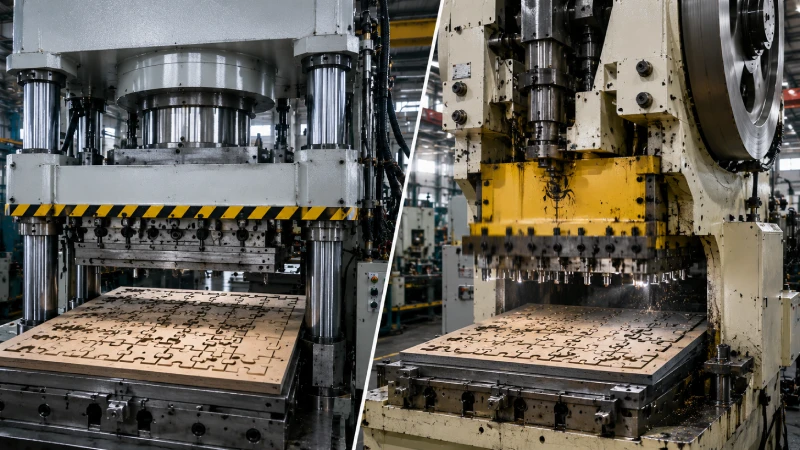
Cutting force is one of the most important factors when selecting a press for puzzle manufacturing. While both hydraulic and mechanical presses are capable of cutting puzzle boards, the way they generate and apply force differs significantly, affecting cutting quality, tooling performance, and production flexibility.
| Factor | Hydraulic Press | Mechanical Press |
|---|---|---|
| Force Availability | Full force throughout the stroke | Maximum force near bottom dead center |
| Force Control | Highly adjustable | Limited adjustment |
| Pressure Consistency | Excellent | Good |
| Thick Material Cutting | Excellent | Good |
| Tooling Protection | Better due to controlled force | Higher impact loading |
Force Delivery Characteristics
A hydraulic press can apply its rated tonnage at virtually any point during the working stroke. This allows operators to precisely control the amount of force required for different puzzle materials and die configurations. The ability to maintain uniform pressure throughout the cutting process is especially beneficial when working with large puzzle boards or complex die patterns.
Mechanical presses operate differently. Their maximum force is generated only near the bottom of the stroke, where the crank mechanism reaches its most advantageous position. While this can be highly effective for repetitive production, force control is generally less flexible compared to hydraulic systems.
Performance in Puzzle Die Cutting
Puzzle manufacturers often process products with varying board thicknesses, puzzle piece counts, and die complexities. Large-format puzzles and high-piece-count designs require consistent force distribution across the entire cutting area to prevent incomplete cuts and uneven edge formation.
In these situations, hydraulic presses often provide a performance advantage because they can deliver controlled and uniform pressure regardless of die size or material variation. Mechanical presses remain highly capable for standardized production environments but may offer less flexibility when production requirements frequently change.
Overall, hydraulic presses generally provide superior cutting force control for demanding puzzle die cutting applications, while mechanical presses excel in stable, high-volume production settings.
Precision Comparison for Puzzle Piece Accuracy
Why Precision Matters
In puzzle manufacturing, precision is just as important as cutting force. Consumers expect puzzle pieces to fit together smoothly, maintain consistent interlocking strength, and display clean, well-defined edges. Even small variations in cutting accuracy can result in loose-fitting pieces, excessive friction during assembly, or visible defects that reduce perceived product quality.
For manufacturers producing premium puzzles or high-piece-count designs, maintaining dimensional consistency across thousands of pieces is critical for protecting brand reputation and minimizing product complaints.
Hydraulic Press Precision Characteristics
Hydraulic presses achieve precision through controlled force application and adjustable operating parameters. Because pressure can be regulated throughout the cutting cycle, operators can optimize force levels according to material thickness, die complexity, and production requirements. Many hydraulic systems also allow dwell time adjustments, enabling the die to remain under pressure momentarily before returning to its starting position.
This controlled approach helps reduce material deformation and promotes more consistent cutting results, particularly when processing varying board materials or intricate puzzle designs.
Mechanical Press Precision Characteristics
Mechanical presses are known for excellent repeatability because their crank-driven motion follows the same stroke path during every cycle. In high-volume production environments, this repeatability can produce highly consistent results when material specifications and die conditions remain stable.
However, because force is delivered more rapidly and with less flexibility for adjustment, variations in material thickness or die wear may have a greater influence on cutting quality over time.
Conclusion
For standardized mass production, both technologies can deliver excellent accuracy. However, when manufacturing a wide range of puzzle products with varying specifications, hydraulic presses often provide greater precision control and more consistent cutting performance across changing production conditions.
Production Efficiency Comparison
Production efficiency is often a deciding factor when selecting between hydraulic and mechanical presses for puzzle cutting. While cutting quality remains essential, manufacturers must also consider output volume, changeover requirements, and overall production flexibility.
| Factor | Hydraulic Press | Mechanical Press |
|---|---|---|
| Stroke Speed | Moderate | High |
| Cycles Per Minute | Lower | Higher |
| Setup Flexibility | Excellent | Moderate |
| Product Changeover | Faster and easier | More limited |
| Production Adaptability | High | Best for repetitive production |
When Mechanical Presses Have an Advantage
Mechanical presses are designed for speed. Their flywheel-driven systems enable rapid stroke cycles, allowing manufacturers to achieve higher production output during long, uninterrupted production runs. When producing large quantities of the same puzzle design using standardized materials and tooling, mechanical presses can deliver excellent throughput and lower production costs per unit.
For factories focused on high-volume manufacturing with minimal product variation, the higher operating speed of mechanical presses can provide a significant productivity advantage.
When Hydraulic Presses Have an Advantage
Although hydraulic presses generally operate at lower cycle rates, they offer superior flexibility. Operators can easily adjust pressure settings, stroke lengths, and operating parameters to accommodate different puzzle formats, board thicknesses, and production requirements.
This flexibility becomes particularly valuable when manufacturers frequently switch between product types or handle custom puzzle orders. Faster setup adjustments and reduced tooling modifications can help offset the lower cycle speed by minimizing downtime between production runs.
Manufacturers investing in automated puzzle production systems often evaluate both speed and flexibility when selecting a press technology. In many cases, the ideal solution depends on production strategy rather than cycle speed alone.
Overall Efficiency Assessment
Mechanical presses typically deliver higher output in dedicated mass-production environments. Hydraulic presses, however, often achieve better overall operational efficiency in facilities that require frequent product changes, diverse puzzle formats, and greater production versatility.
Maintenance and Long-Term Operating Costs
Hydraulic Press Maintenance Requirements
Hydraulic presses rely on a fluid-powered system that requires routine inspection and preventive maintenance. Key maintenance tasks include monitoring hydraulic oil quality, replacing filters, inspecting hoses and fittings, and checking cylinder seals for wear. Maintaining clean hydraulic fluid is particularly important because contamination can affect system performance and reduce component lifespan.
When properly maintained, hydraulic systems are known for stable operation and relatively low mechanical wear because force is transmitted through fluid pressure rather than high-impact mechanical components.
Mechanical Press Maintenance Requirements
Mechanical presses contain numerous moving parts that are subjected to continuous stress during operation. Common maintenance activities include lubricating bearings, inspecting flywheel assemblies, servicing clutch and brake systems, and monitoring crankshaft components for wear.
Because mechanical presses operate at higher speeds and rely on direct mechanical force transmission, certain components may experience greater wear over time, especially in demanding production environments.
Downtime and Service Considerations
Both press types require scheduled maintenance, but their maintenance profiles differ. Hydraulic presses may occasionally require seal replacements or hydraulic component servicing, while mechanical presses often involve more frequent inspection of wear-prone moving parts.
Spare parts availability, technician expertise, and production schedules can all influence overall maintenance costs. Facilities operating around the clock may place greater emphasis on minimizing unplanned downtime when evaluating equipment options.
Cost of Ownership Comparison
There is no universal winner in terms of operating cost. Mechanical presses may offer lower energy costs in some high-volume applications, while hydraulic presses can reduce tooling stress and provide greater production flexibility. The most cost-effective solution depends on production volume, product variety, maintenance practices, and long-term manufacturing objectives.
Which Press Is Better for Different Types of Puzzle Manufacturers?
There is no single press technology that is ideal for every puzzle manufacturer. The best choice depends on production volume, product diversity, quality requirements, and long-term business objectives. Understanding the strengths of each system can help manufacturers select equipment that aligns with their operational needs.
Small and Medium Puzzle Producers
For small and medium-sized manufacturers, hydraulic presses are often the preferred solution. These businesses frequently produce multiple puzzle formats, seasonal products, promotional puzzles, or custom orders. The adjustable force settings and flexible operating parameters of hydraulic systems make it easier to switch between products without extensive machine modifications.
In addition, hydraulic presses can help reduce setup complexity and provide better adaptability when production requirements change.
Large Volume Puzzle Factories
Manufacturers focused on continuous, high-volume production may benefit from mechanical presses. When producing large quantities of identical puzzle products over extended periods, the higher cycle speeds of mechanical systems can significantly increase throughput.
Because production specifications remain relatively stable, the reduced flexibility of a mechanical press becomes less of a concern, allowing manufacturers to maximize efficiency and output.
Premium Puzzle Manufacturers
Companies producing premium puzzles often prioritize cut quality and consistency over maximum production speed. Hydraulic presses are frequently favored in this segment because of their precise force control and ability to accommodate complex puzzle designs, specialty materials, and high-piece-count products.
The controlled cutting process can contribute to cleaner edges, improved piece fit, and more consistent product quality.
Hybrid Manufacturing Operations
Some large manufacturers operate both hydraulic and mechanical presses to serve different production requirements. Mechanical presses may handle standardized, high-volume products, while hydraulic systems are reserved for specialty puzzles, custom orders, and shorter production runs.
Ultimately, hydraulic presses are generally the better choice for flexibility and precision, while mechanical presses remain highly effective for dedicated mass-production environments. The most suitable solution depends on the manufacturer’s specific production strategy and growth plans.
Industry Trend: Why Many Modern Puzzle Manufacturers Prefer Hydraulic Systems
Demand for Greater Product Variety
The puzzle market has become increasingly diverse, with manufacturers producing everything from traditional family puzzles to custom promotional products, educational puzzles, and limited-edition collections. As product variety increases, manufacturers need equipment that can adapt quickly to different sizes, board materials, and cutting requirements.
Hydraulic presses are well suited to this environment because operators can easily adjust pressure, stroke settings, and operating parameters without extensive mechanical modifications.
Need for Better Process Control
Modern manufacturers place a strong emphasis on quality consistency and production efficiency. Hydraulic systems offer precise force control throughout the cutting cycle, helping maintain consistent cutting quality across varying materials and die configurations.
This level of control can also reduce unnecessary stress on cutting dies, potentially extending tooling life and lowering scrap rates caused by incomplete or inconsistent cuts.
Integration with Modern Automation
As factories continue to adopt digital manufacturing technologies, hydraulic presses are increasingly being integrated with PLC controls, servo-driven systems, and automated material handling equipment. These capabilities allow manufacturers to monitor performance, adjust production parameters, and improve process consistency through data-driven decision-making.
Many companies investing in puzzle die cutting systems are choosing hydraulic technology because it combines flexibility, precision, and automation compatibility. As demand for customized and short-run puzzle production continues to grow, hydraulic presses are becoming the preferred solution for many modern puzzle manufacturing operations.
Conclusion
Both hydraulic and mechanical presses play important roles in industrial puzzle manufacturing, but they serve different production priorities. Mechanical presses are highly effective in large-scale manufacturing environments where speed, repeatability, and continuous production are the primary objectives. Their fast operating cycles can deliver exceptional output when producing standardized puzzle products.
Hydraulic presses, on the other hand, offer greater flexibility, superior force control, and more precise adjustment capabilities. These advantages make them particularly well suited for manufacturers producing multiple puzzle formats, custom products, or premium-quality puzzles that require consistent cutting performance.
For many modern puzzle manufacturers, hydraulic technology provides the best balance between quality, adaptability, and long-term operational efficiency. Before investing in a puzzle cutting press, manufacturers should carefully evaluate production volumes, material specifications, product diversity, and future expansion plans to determine which technology aligns best with their manufacturing goals.
FAQ
Is a hydraulic press better for puzzle cutting?
In many puzzle manufacturing applications, hydraulic presses offer significant advantages because they provide adjustable force, consistent pressure distribution, and greater process control. These characteristics are especially valuable when cutting thick chipboard materials, producing high-piece-count puzzles, or handling multiple puzzle formats. However, the best choice ultimately depends on production requirements and output goals.
Are mechanical presses faster than hydraulic presses?
Yes. Mechanical presses generally operate at higher cycle speeds because their flywheel-driven systems can perform rapid and repeatable strokes. This makes them well suited for long production runs involving standardized puzzle products. Hydraulic presses typically operate at slower cycle rates but compensate with greater flexibility and easier adjustment for changing production requirements.
Which press provides better cutting accuracy?
Both hydraulic and mechanical presses are capable of producing highly accurate puzzle pieces when properly configured. Mechanical presses excel in repeatability during stable production conditions, while hydraulic presses offer superior control over force application and cutting parameters. When working with varying materials, complex dies, or multiple puzzle formats, hydraulic systems often provide more consistent cutting results.
What is the typical tonnage required for puzzle die cutting?
The required tonnage depends on puzzle size, board thickness, die complexity, and production requirements. Small puzzles may require relatively low tonnage levels, while larger or high-piece-count puzzles often need substantially higher cutting forces. Manufacturers typically determine tonnage requirements through material testing and die specifications before selecting a press.
Which press is more suitable for custom puzzle production?
Hydraulic presses are generally considered the better choice for custom puzzle production. Their adjustable force settings, programmable controls, and flexible operating parameters allow manufacturers to efficiently accommodate different puzzle sizes, board materials, and specialty designs. For businesses producing short runs, personalized puzzles, or frequently changing product lines, hydraulic technology often provides the greatest operational flexibility while maintaining high cutting quality and consistency.
