
Introduction
A hydraulic assembly press is a type of industrial machine that uses fluid pressure to generate controlled force for assembling components. In modern manufacturing, precise and stable pressing force is essential—especially when installing bearings, shafts, or structural parts.
Hydraulic systems are widely used because they can deliver high tonnage with smooth, consistent motion, making them ideal for heavy-duty and high-load applications. Compared to other press technologies, hydraulic presses offer better force control over long strokes, which is critical in industries such as automotive, machinery, and metal fabrication.
This article explains how hydraulic assembly presses work and when they are the best choice for your production needs.
What Is a Hydraulic Assembly Press?
A hydraulic assembly press is a machine that uses pressurized hydraulic fluid to generate force for component installation and assembly operations. Unlike mechanical systems that rely on flywheels or pneumatic systems that use compressed air, hydraulic presses deliver force through liquid pressure, allowing for greater control and higher output.
At its core, the system operates based on Pascal’s Law: pressure applied to a confined fluid is transmitted equally in all directions. This principle allows relatively small input force to generate extremely large output force at the press ram.
Main Components
A typical hydraulic assembly press includes:
- Hydraulic cylinder – converts fluid pressure into linear motion
- Hydraulic pump – generates fluid flow and pressure
- Control valves – regulate pressure, flow, and direction
- Oil reservoir – stores hydraulic fluid
- Frame and ram – provide structural support and pressing action
Compared to other systems described in the main assembly press overview, hydraulic presses are specifically designed for applications requiring high force and stable motion over longer distances.
How a Hydraulic Assembly Press Works
A hydraulic assembly press works by converting hydraulic energy into mechanical force through a controlled system of fluid pressure and movement.
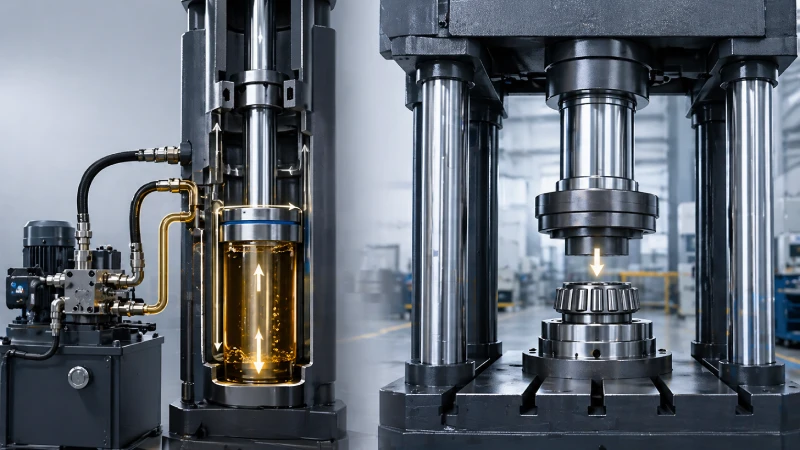
Hydraulic Cylinder Operation
The hydraulic cylinder is the core actuator. When pressurized fluid enters the cylinder, it pushes against a piston, generating linear motion. This motion drives the press ram downward to apply force to the workpiece.
Fluid Pressure Generation
A hydraulic pump creates pressure by moving fluid from the reservoir into the system. The pressure level determines the force output. Because liquids are nearly incompressible, the system can maintain consistent pressure throughout the stroke.
Controlled Force Application
Control valves regulate how much pressure is applied and how fast the ram moves. This allows operators to:
- Apply gradual force increases
- Maintain constant pressure during pressing
- Adjust speed for different materials
This level of control is especially important when assembling delicate or high-precision components, as it reduces the risk of misalignment or damage.
Advantages of Hydraulic Assembly Presses
Hydraulic assembly presses offer several key advantages that make them a preferred solution for many industrial applications.
1. High Force Output
Hydraulic systems can generate extremely high tonnage, making them suitable for heavy-duty assembly tasks such as pressing large bearings or structural components. This is particularly valuable in automotive and heavy machinery industries.
2. Smooth and Stable Movement
Unlike mechanical presses that may produce abrupt motion, hydraulic presses deliver smooth and continuous force. This reduces vibration and improves alignment accuracy during assembly.
3. Ideal for Large Components
Hydraulic presses are well-suited for handling large or bulky parts. Their ability to maintain force over long strokes makes them effective for deep or complex assemblies.
4. Flexible Force Control
Operators can easily adjust pressure, speed, and stroke length. This flexibility allows a single machine to handle multiple applications without significant reconfiguration.
5. Cost Effectiveness
Compared to servo systems, hydraulic presses typically have lower upfront costs. For applications that do not require ultra-high precision or data tracking, they offer excellent value for money.
Common Applications of Hydraulic Assembly Presses
Hydraulic assembly presses are widely used across various industries where high force and reliability are required.
Transmission Assembly
In transmission manufacturing, hydraulic presses are used to install bearings, gears, and shafts into housings. These components often require significant force and precise alignment. For more details, see assembly press for transmission.
Engine Assembly
Hydraulic presses are also used in engine production to install valve seats, bushings, and crankshaft components. Their smooth force application helps prevent damage to critical parts. Learn more at assembly press for automotive engine.
Frame Assembly
For structural components such as metal frames, hydraulic presses provide the القوة needed to fit large parts together securely. Their ability to handle heavy loads makes them ideal for this application. See frame assembly press for related solutions.
Overall, hydraulic presses are best suited for applications where force requirements are high and precision is important but not extremely tight.
Hydraulic vs Pneumatic vs Servo Assembly Press
Choosing the right press technology depends on your application requirements. Below is a comparison of hydraulic, pneumatic, and servo assembly presses:
| Feature | Hydraulic Press | Pneumatic Press | Servo Press |
|---|---|---|---|
| Force Capacity | Very high | Low to medium | Medium to high |
| Precision | Moderate | Low | Very high |
| Speed | Moderate | High | Adjustable |
| Control | Good | Limited | Excellent |
| Cost | Medium | Low | High |
| Best For | Heavy-duty applications | Light assembly | High-precision tasks |
When Hydraulic Is the Better Choice
Hydraulic assembly presses are the best option when:
- High force is required
- Components are large or heavy
- Smooth, consistent motion is needed
- Budget constraints limit the use of servo systems
While servo presses offer superior precision and data control, and pneumatic presses provide speed for lighter tasks, hydraulic presses remain the most practical solution for many industrial assembly operations.
Conclusion
Hydraulic assembly presses play a critical role in modern manufacturing by delivering high force, smooth operation, and reliable performance. They are especially effective for heavy-duty applications such as transmission, engine, and frame assembly. If your production requires consistent force over long strokes and the ability to handle large components, a hydraulic press is often the best choice.
If you are evaluating assembly solutions or planning a new production line, it’s worth discussing your specific requirements with an experienced supplier. The right press configuration can significantly improve efficiency, product quality, and long-term operational costs.
