
Introduction
Automotive engine manufacturing demands extreme precision, especially during press-fit assembly processes.
Components such as bearings, shafts, and valve seats must be installed with tightly controlled force and alignment to ensure optimal engine performance and durability. Even slight deviations in force application or positioning can lead to premature wear, noise, or complete component failure. This is why assembly presses play a critical role in modern engine production lines.
By delivering controlled, repeatable force, advanced assembly press systems help manufacturers achieve consistent quality, reduce defects, and meet the increasingly strict performance standards of today’s automotive industry.
Common Engine Components Installed Using an Assembly Press
Assembly presses are essential for installing a wide range of precision components in automotive engines. These components require accurate positioning and controlled force to ensure long-term reliability and performance.
Bearings are among the most critical press-fit components. They must be installed with exact interference fits to support rotational movement while minimizing friction and wear. Improper installation can lead to overheating or early failure.
Valve seats require precise pressing into the cylinder head. Any misalignment can affect sealing performance, leading to compression loss and reduced engine efficiency. Controlled force ensures proper seating without damaging the surrounding material.
Bushings are commonly used in various engine assemblies to reduce friction and absorb loads. These components must be pressed evenly to avoid deformation, which could compromise their function.
Shafts, including camshafts and auxiliary shafts, often require press-fitting into housings or gears. Accurate alignment is essential to maintain rotational balance and prevent vibration.
Crankshaft components, such as gears and counterweights, also rely on press-fit assembly. These parts operate under high stress, making precise installation crucial for engine durability and performance.
In all these applications, assembly presses ensure that components are installed consistently, reducing variability and improving overall engine quality.
Why Automotive Engine Assembly Requires Precise Force Control
Precise force control is fundamental in engine assembly because many components are sensitive to both overloading and insufficient force. Without accurate control, manufacturers risk damaging expensive parts or producing assemblies that fail prematurely.
One of the main reasons is damage prevention. Excessive force during press-fitting can deform components, crack housings, or damage surface finishes. For example, pressing a bearing with too much force can alter its internal geometry, leading to increased friction and reduced lifespan.
Another critical factor is alignment. Many engine components must be installed with micron-level precision. Uneven or uncontrolled force can cause tilting or misalignment, which may not be immediately visible but can result in long-term performance issues such as noise, vibration, or inefficiency.
Assembly consistency is also a major concern in high-volume production. Automotive manufacturers require every engine to meet the same quality standards. Precise force control ensures repeatability across thousands of cycles, reducing variation and minimizing defects.
Additionally, modern production environments demand data-driven quality control. Controlled force application allows manufacturers to monitor and record each press cycle, ensuring that every component meets predefined specifications. This level of precision is essential for maintaining quality and meeting industry regulations.
Servo vs Hydraulic Assembly Press for Engine Production
Choosing between servo and hydraulic assembly presses depends on the specific requirements of engine manufacturing processes. Both technologies offer unique advantages, and understanding their differences is key to selecting the right solution.
Servo assembly presses are known for their high precision and programmability. They use electric servo motors to control force, position, and speed with exceptional accuracy. This makes them ideal for applications requiring detailed force-displacement monitoring, such as installing delicate components like valve seats or precision bearings. Servo presses also enable real-time feedback and data collection, supporting advanced quality control and traceability.
Hydraulic assembly presses, on the other hand, are valued for their ability to deliver high force over longer strokes. They are particularly suitable for heavy-duty applications, such as pressing large crankshaft components or assembling engine blocks. Hydraulic systems are robust and capable of handling high loads, making them a reliable choice for demanding industrial environments.
In terms of efficiency, servo presses typically offer faster cycle times and lower energy consumption for precision tasks, while hydraulic presses excel in applications requiring sustained high force.
When to choose servo presses:
- High precision and repeatability required
- Data monitoring and traceability are critical
- Complex assembly processes with variable force profiles
When to choose hydraulic presses:
- High tonnage requirements
- Large or heavy components
- Less emphasis on detailed force profiling
In many modern engine assembly lines, manufacturers use a combination of both technologies to optimize performance across different stages of production.
Key Requirements When Selecting an Engine Assembly Press
Selecting the right assembly press for engine manufacturing involves evaluating several critical technical factors. These parameters directly impact production efficiency, product quality, and long-term reliability.
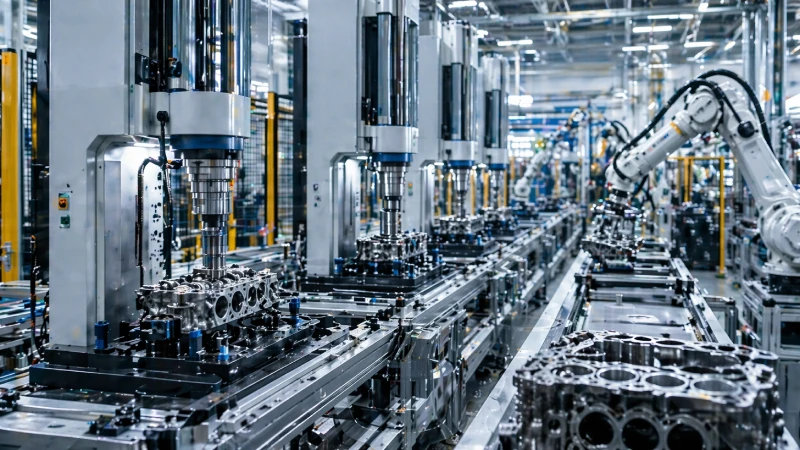
Force range is one of the most important considerations. The press must be capable of delivering sufficient force for all intended applications, from light press-fit operations to heavy-duty component installation. Choosing a press with an appropriate force range ensures flexibility and avoids overloading the system.
Stroke length is another key factor. Different components require varying insertion depths, so the press must accommodate the full range of motion needed for the assembly process. Adjustable stroke settings can improve versatility and efficiency.
Position accuracy is essential for maintaining tight tolerances. High-precision positioning ensures that components are installed correctly, reducing the risk of misalignment and improving overall product quality.
Data monitoring and control capabilities are increasingly important in modern manufacturing. Advanced assembly presses can record force, position, and displacement data for each cycle, enabling real-time quality verification and traceability. This data can also be used to identify process deviations and optimize production.
Other considerations include integration with automation systems, ease of maintenance, and overall system reliability. By carefully evaluating these factors, manufacturers can select a press that meets both current and future production requirements.
Automation in Modern Automotive Engine Assembly Lines
Automation has become a defining feature of modern automotive engine manufacturing, significantly enhancing efficiency, precision, and consistency. Assembly presses are now integrated into highly automated production lines that leverage advanced technologies.
Robotics play a central role in handling and positioning components. Robotic arms can precisely place parts into the press, ensuring consistent alignment and reducing the risk of human error. This improves both speed and accuracy in the assembly process.
Sensors are widely used to monitor key parameters such as force, position, and temperature. These sensors provide real-time feedback, allowing the system to adjust operations dynamically and maintain optimal performance. They also help detect anomalies early, preventing defective assemblies.
Traceability systems are essential for quality assurance. Modern assembly lines record detailed data for each component and process step, creating a digital record that can be used for analysis and compliance. This is particularly important in the automotive industry, where strict quality standards must be met.
Automation not only improves productivity but also enhances safety by reducing manual intervention. As engine designs become more complex, the integration of smart automation with assembly presses will continue to play a crucial role in achieving high-quality, efficient production.
Conclusion
Assembly presses are indispensable in automotive engine manufacturing, enabling precise, reliable, and consistent component installation. From bearings to crankshaft assemblies, controlled press-fit operations ensure optimal engine performance and durability.
By selecting the right press technology and integrating advanced automation, manufacturers can significantly improve production efficiency and quality.
