
Introduction
Frame assembly refers to the process of joining large structural components—such as beams, housings, or welded parts—into a rigid, load-bearing framework.
Unlike small-part assembly, this process involves heavy-duty components that require high force, precise alignment, and stable pressing conditions. Industries such as automotive manufacturing, construction machinery, and industrial equipment rely heavily on frame assembly to ensure structural integrity. To meet these demands, manufacturers use specialized equipment known as frame assembly presses.
These machines are designed to deliver controlled, high-tonnage force across large working areas, enabling accurate and repeatable assembly of oversized components.
What Is a Frame Assembly Press?
A frame assembly press is an industrial press system specifically designed to assemble large structural components by applying controlled force to fit, align, or secure parts together. These presses are commonly used where components are too large or too heavy for standard assembly equipment.
Unlike small-part assembly presses—which are typically used for installing bearings, bushings, or electronic components—frame assembly presses operate at significantly higher force levels and offer much larger working spaces. They are built with reinforced frames, extended stroke lengths, and robust guiding systems to ensure stability during operation.
The key distinction lies in scale and application. Small assembly presses focus on precision for compact parts, while frame assembly presses combine precision with power to handle structural assemblies. This requires not only higher tonnage but also better control over force distribution to avoid deformation or misalignment of large components.
In many cases, these presses are integrated into production lines or used as standalone stations for assembling frames, housings, or welded structures that form the backbone of industrial products.
Typical Applications for Frame Assembly Presses
Frame assembly presses are widely used across industries that deal with large, load-bearing structures. Their ability to deliver consistent force over large areas makes them essential in heavy manufacturing environments.
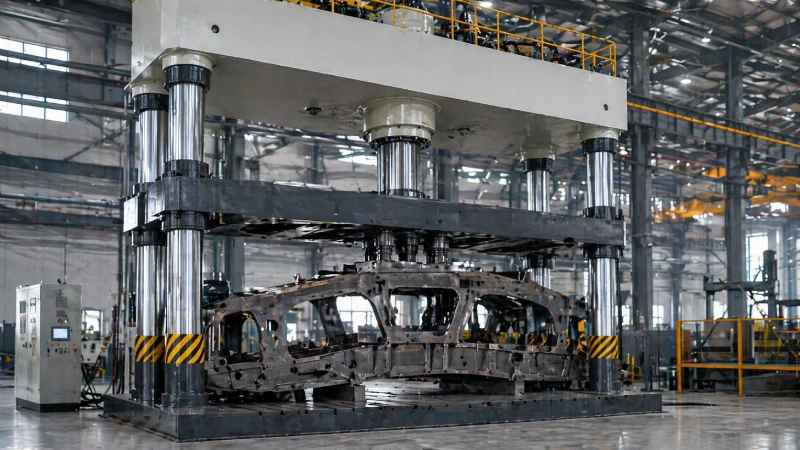
In the automotive industry, frame assembly presses are commonly used for chassis assembly. This includes pressing structural components such as cross members, subframes, and reinforcement elements into precise positions. Proper alignment is critical here, as even minor deviations can affect vehicle safety and performance.
In machinery manufacturing, these presses are used to assemble equipment frames that support motors, gear systems, and other mechanical components. These frames must withstand continuous operational loads, making precise assembly essential for long-term durability.
Heavy equipment manufacturing—such as construction and mining machinery—also relies heavily on frame assembly presses. Large structural parts, often made from thick steel plates or castings, must be assembled with high force to ensure tight fits and structural stability.
Additionally, frame assembly presses are used in industries like energy, transportation, and industrial fabrication, where large welded or fabricated structures require accurate positioning and secure joining.
Why Hydraulic Presses Are Commonly Used for Frame Assembly
Hydraulic presses are the most common choice for frame assembly applications, and for good reason. Their design and operating principles make them particularly well-suited for handling large, heavy components.
First, hydraulic systems can generate extremely high force, often ranging from tens to thousands of tons. This makes them ideal for pressing large structural components that require significant force to achieve proper fit and alignment.
Second, hydraulic presses offer long stroke capabilities. Unlike mechanical presses, which have fixed stroke lengths, hydraulic systems can be designed with extended strokes to accommodate tall or bulky assemblies. This flexibility is critical when working with large frames.
Another key advantage is precise force control. Hydraulic systems allow operators to adjust pressure and speed throughout the pressing cycle. This ensures that force is applied gradually and evenly, reducing the risk of damaging components or causing misalignment.
For a deeper understanding of how hydraulic systems function in assembly applications, you can explore the working principles and advantages of a hydraulic assembly press in more detail.
Key Design Considerations for a Frame Assembly Press
Designing or selecting a frame assembly press requires careful evaluation of several critical factors. These considerations directly impact performance, safety, and long-term reliability.
Force requirement is one of the most important parameters. The press must generate sufficient tonnage to assemble components without overstressing materials. This requires understanding the interference fit, material properties, and assembly tolerances.
Bed size and working area are equally important. Since frame components are often large and irregularly shaped, the press must provide adequate space to position and support the workpiece. Custom fixtures are often used to ensure proper alignment during assembly.
Frame rigidity plays a crucial role in maintaining accuracy. A poorly designed press frame can deform under load, leading to uneven force distribution and assembly errors. High-quality frame assembly presses use reinforced structures and precision guiding systems to maintain alignment under heavy loads.
Safety systems are essential due to the high forces involved. Modern presses are equipped with features such as light curtains, two-hand control systems, emergency stops, and overload protection. These systems help prevent accidents and ensure safe operation in demanding industrial environments.
In addition, automation and control systems are increasingly integrated into frame assembly presses. Servo controls, force monitoring, and data logging capabilities allow manufacturers to achieve higher precision and traceability in their assembly processes.
Custom Frame Assembly Press Solutions
In many cases, standard press machines are not sufficient for frame assembly applications. The size, shape, and complexity of structural components often require fully customized solutions.
Custom frame assembly presses are designed based on specific project requirements, including part dimensions, force needs, production volume, and workflow integration. This ensures optimal performance and efficiency for each application.
Customization can include features such as adjustable bed sizes, multi-point pressing systems, automated loading and unloading, and specialized tooling. For example, large frames may require multiple hydraulic cylinders working simultaneously to ensure even force distribution across the structure.
Working with a specialized custom assembly press manufacturer allows businesses to develop solutions tailored to their exact needs. These manufacturers provide engineering support, system integration, and after-sales service, ensuring that the press meets both technical and operational requirements.
Custom solutions are particularly valuable in industries with unique or evolving production demands, where flexibility and scalability are essential.
Conclusion
Frame assembly presses are essential tools for assembling large, load-bearing structures across a wide range of industries. Their ability to deliver high force, maintain precision, and handle oversized components makes them indispensable in modern manufacturing.
Whether you are working with automotive chassis, machinery frames, or heavy equipment structures, choosing the right press solution is critical to achieving consistent quality and efficiency. If your application involves unique requirements, investing in a customized frame assembly press can provide significant long-term benefits.
If you’re planning a new project or upgrading your production line, consider working with an experienced press manufacturer to develop a solution tailored to your needs.
