
Introduction
Selecting the right assembly press manufacturer is a critical decision that directly impacts production efficiency, product quality, and long-term operational costs. In modern manufacturing environments—especially in automotive, electronics, and machinery sectors—assembly presses must deliver consistent force, precise control, and repeatable accuracy.
A reliable manufacturer ensures not only high-performance equipment but also stable operation over time, minimizing downtime and maintenance risks. Beyond the machine itself, factors such as engineering support, customization capability, and after-sales service play a vital role.
Choosing the right partner means securing a solution that aligns with your production requirements today while remaining scalable for future growth.
What Does an Assembly Press Manufacturer Do?
An assembly press manufacturer is responsible for far more than simply producing machinery. Their role spans the entire lifecycle of the equipment, from initial concept design to long-term operational support.
At the design stage, manufacturers develop press systems based on specific application requirements. This includes determining the appropriate force range, stroke length, structural design, and control system. For industries requiring high precision—such as bearing press-fitting or electronic component assembly—engineering accuracy is especially critical.
During manufacturing, the company produces the press structure, integrates drive systems (hydraulic, pneumatic, or servo), and ensures quality control across all components. A reputable manufacturer will maintain strict standards for machining accuracy, material selection, and system stability.
Tooling integration is another key responsibility. Assembly presses often need to work with custom fixtures, dies, or positioning tools. Manufacturers either design these in-house or collaborate closely with tooling partners to ensure compatibility and precision alignment.
Finally, installation and after-sales support are essential. This includes on-site commissioning, operator training, maintenance guidance, and troubleshooting services. A strong manufacturer acts as a long-term technical partner, not just a machine supplier.
Types of Assembly Press Manufacturers
Different manufacturers specialize in different levels of complexity and customization. Understanding these categories helps you choose the right partner for your project.
Standard Machine Manufacturers
Standard assembly press manufacturers focus on producing pre-designed machines with fixed specifications. These presses are typically available in common tonnage ranges and standard configurations. They are suitable for general applications where requirements are consistent and do not demand extensive customization.
The advantage of this type is shorter lead times and lower costs. However, flexibility is limited, making them less suitable for complex or high-precision assembly tasks.
Custom Assembly Press Manufacturers
Custom manufacturers design and build presses tailored to specific production requirements. This includes adjusting force capacity, stroke length, working area, control systems, and safety features.
They are commonly used in industries such as automotive transmission assembly, motor assembly, and precision electronics. These manufacturers often provide engineering consultation, CAD design, and prototype validation before production.
If your application involves tight tolerances or unique components, working with a custom manufacturer is typically the best choice. For deeper insights, you can explore solutions offered by a custom assembly press manufacturer that specializes in tailored systems.
Automation System Integrators
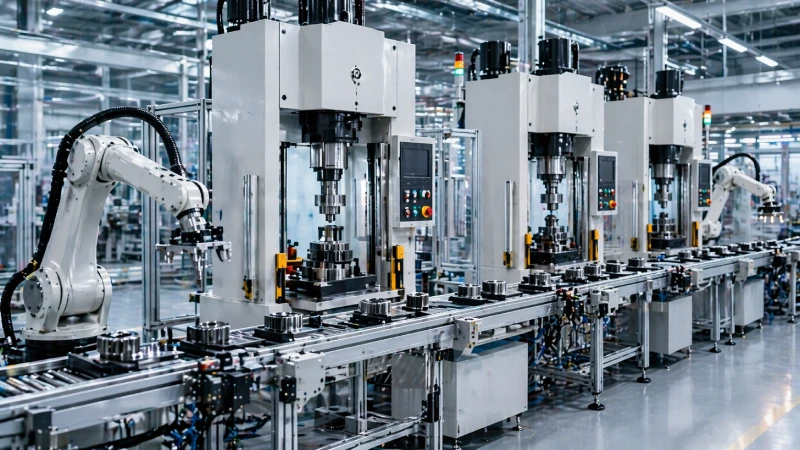
Automation integrators go beyond standalone machines. They provide complete production line solutions, integrating assembly presses with conveyors, robotic arms, vision systems, and quality inspection units.
These companies are ideal for high-volume production environments where efficiency, consistency, and data tracking are critical. They focus on system-level optimization rather than just individual machines.
While the investment is higher, the result is a fully automated assembly process with improved productivity and reduced labor dependency.
What Makes a Good Assembly Press Manufacturer?
Choosing a high-quality manufacturer requires evaluating multiple technical and operational factors.
Engineering Capability
A strong manufacturer should have a dedicated engineering team capable of designing press systems based on real-world production challenges. This includes force calculation, structural analysis, and control system integration.
Industry Experience
Experience in your specific industry is crucial. Manufacturers familiar with automotive, electronics, or heavy machinery applications understand the unique requirements and potential risks involved.
Customization Ability
Not all assembly processes are the same. A good manufacturer should offer flexible customization options, including tooling design, force control modes, and integration with existing equipment.
Automation Support
Modern production lines increasingly rely on automation. Manufacturers that can integrate servo systems, sensors, and data monitoring features provide a significant competitive advantage.
Global Delivery and Compliance
If your operations span multiple regions, the manufacturer should meet international standards and support global shipping, installation, and certification requirements.
Technical Service and Support
After-sales service is often overlooked but extremely important. Fast response times, spare parts availability, and remote troubleshooting capabilities ensure minimal downtime and long-term reliability.
Questions to Ask Before Choosing an Assembly Press Supplier
Before finalizing a supplier, it’s essential to ask the right technical and operational questions to avoid costly mistakes.
Can they customize force and stroke?
Different applications require different force ranges and stroke lengths. Ensure the manufacturer can adjust these parameters to match your exact requirements.
Do they provide CAD drawings and technical documentation?
Detailed drawings help you evaluate machine design, layout compatibility, and integration feasibility. A professional manufacturer should provide complete documentation.
Can they integrate with existing production lines?
If you already have a production setup, the new press must fit seamlessly into the workflow. Ask about communication protocols, automation compatibility, and layout integration.
Do they offer on-site installation and training?
Installation is a critical phase. Manufacturers that provide on-site commissioning and operator training reduce the risk of errors and ensure smooth startup.
What is their lead time and delivery capability?
Production schedules depend heavily on delivery timelines. Confirm realistic lead times and whether the supplier can meet your deadlines.
What kind of after-sales support do they provide?
Ask about maintenance services, spare parts supply, and technical support response time. Reliable after-sales service is a key indicator of a trustworthy manufacturer.
Manufacturer vs Supplier vs Integrator
Understanding the difference between these roles helps clarify what kind of partner you actually need.
| Type | Role | Best For | Limitations |
|---|---|---|---|
| Manufacturer | Designs and builds assembly presses | Custom machines, direct factory sourcing | May not provide full system integration |
| Supplier | Distributes machines from manufacturers | Quick purchase, local availability | Limited technical customization |
| Integrator | Builds complete automated systems | Full production line solutions | Higher cost and longer implementation time |
A manufacturer focuses on machine production, while a supplier acts as an intermediary. Integrators, on the other hand, provide comprehensive solutions that combine multiple systems into one cohesive production line.
If your project requires tailored solutions, working directly with a custom assembly press manufacturer is usually the most effective approach, as it ensures better control over design, performance, and long-term support.
Conclusion
Choosing the right assembly press manufacturer is not just about buying equipment—it’s about building a long-term partnership that supports your production goals. From engineering design to after-sales service, every stage plays a role in ensuring efficiency, precision, and reliability.
If you are planning a new project or upgrading your production line, the best approach is to start with detailed technical requirements. Share your product drawings, assembly process, and performance expectations with a qualified manufacturer to receive a tailored solution.
A well-matched assembly press system can significantly improve productivity, reduce defects, and create a strong foundation for scalable manufacturing success.
