
Choosing a metal stamping press manufacturer is not only about comparing machine prices or tonnage ratings. In metal forming projects, the manufacturer you choose directly affects product accuracy, die life, production speed, material usage, and long-term operating costs.
A press supplier that works well for simple aluminum brackets may not be suitable for stainless steel automotive parts or heavy-gauge appliance panels. Different materials, tooling systems, and production environments require different press designs and engineering capabilities.
The right metal stamping press manufacturer should understand your material type, production volume, part geometry, die requirements, and future automation plans. More importantly, they should be able to recommend the correct press structure, tonnage, feeding system, and support equipment for your application.
This guide explains what makes metal stamping press manufacturers different, what capabilities matter most, and how to choose the right partner for your project.
What Is Different About Metal Stamping Press Manufacturers?
Metal stamping press manufacturers are different from general industrial equipment suppliers because they focus specifically on the challenges of metal forming. Their experience is not limited to producing machines; they also understand how metal behaves under pressure, how dies interact with different materials, and how production lines must be configured for stable, repeatable forming.
The first major difference is material knowledge. A manufacturer that regularly builds presses for steel forming may not have the same expertise in aluminum, stainless steel, copper, or high-strength alloys. Each material reacts differently during stamping. Stainless steel usually requires higher force and stronger frames. Aluminum often requires better control to prevent surface damage. High-strength steel may require both higher tonnage and improved die protection.
Metal stamping press manufacturers also typically provide stronger tooling support. Many can recommend compatible progressive dies, transfer dies, blanking dies, or deep drawing tooling systems. Some manufacturers even work directly with die makers to ensure that the press and tooling are designed together.
Industry experience is another important difference. Manufacturers that serve the automotive industry usually have experience with large, high-speed production lines and tight dimensional tolerances. Those serving electronics may specialize in precision stamping for small parts. Appliance manufacturers often need larger bed sizes and reliable production for medium-thickness sheet metal.
In addition, experienced metal stamping press manufacturers usually provide:
- Material-specific press recommendations
- Die matching and integration support
- Automation system compatibility
- Long-term spare parts and service support
- Knowledge of industry-specific production requirements
Because of this, choosing a manufacturer with real metal forming experience is usually far more important than simply choosing the lowest-priced machine supplier.
Key Capabilities to Look For
Not all metal stamping press manufacturers offer the same level of engineering or production capability. Before making a decision, evaluate whether the manufacturer can support your exact material, part size, and production goals.
Steel, Aluminum, and Stainless Steel Experience
A strong manufacturer should have proven experience working with multiple metal types, including carbon steel, aluminum, and stainless steel. These materials require different press configurations.
- Steel stamping often requires higher tonnage and rigid machine frames.
- Aluminum stamping requires smooth operation and precise control to reduce scratches or deformation.
- Stainless steel stamping typically needs stronger drive systems and higher forming pressure.
Ask the manufacturer for previous project examples or case studies involving materials similar to yours.
High-Tonnage Capability
If you are producing large parts or working with thick metal, high tonnage becomes essential. Some manufacturers only specialize in small or medium presses, while others can build machines above 500 tons, 1,000 tons, or even more.
High-tonnage presses are often needed for:
- Automotive body panels
- Appliance housings
- Structural metal parts
- Heavy-duty industrial components
A manufacturer with high-tonnage experience will also understand the importance of frame strength, bed stability, vibration control, and long-term durability.
Progressive Die Support
Many modern metal stamping projects use progressive dies to improve efficiency and reduce labor costs. Progressive dies allow multiple operations—such as punching, bending, trimming, and forming—to occur in a single press cycle.
A capable manufacturer should understand:
- Progressive die setup requirements
- Press accuracy and repeatability
- Feed system synchronization
- Die protection systems
- High-speed production needs
If your project uses progressive dies, make sure the manufacturer can provide a press that is designed specifically for this type of tooling.
Automation Compatibility
Modern metal stamping production increasingly depends on automation. Your press manufacturer should be able to support or integrate:
- Coil feeding systems
- Decoilers and straighteners
- Servo feeders
- Robotic loading and unloading
- Conveyor systems
- Automated part collection
Even if your current production line is manual, it is wise to choose a manufacturer whose machines can be upgraded later. A press with built-in automation compatibility gives you more flexibility as production grows.
The best manufacturers do not simply sell a press. They help create a complete metal forming system that can support current production and future expansion.
Best Manufacturer Type for Different Metal Stamping Applications
Different industries require different types of metal stamping presses. The best manufacturer for one application may not be the right choice for another.
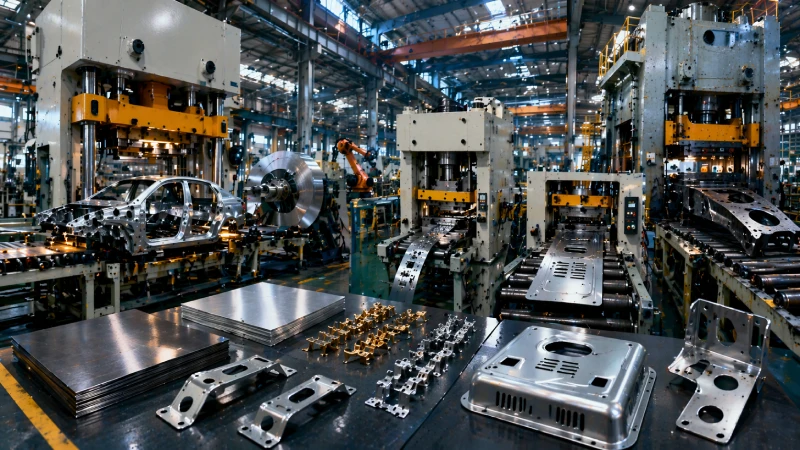
Automotive Applications
Automotive stamping requires high production speed, high tonnage, and excellent repeatability. Automotive manufacturers often need presses for body panels, brackets, structural reinforcements, and chassis components.
The best manufacturer type for automotive applications is usually a large-scale press manufacturer with experience in:
- Progressive die lines
- Transfer press systems
- High-tonnage mechanical or servo presses
- Automated feeding and robotic handling
- Tight dimensional tolerances
Manufacturers serving the automotive sector are often better prepared for large-volume production and strict quality standards.
Electronics Applications
Electronics parts are smaller and more precise. Connectors, terminals, shielding parts, and small brackets require high-speed and highly accurate stamping.
For electronics applications, choose a manufacturer that specializes in:
- Precision stamping presses
- High-speed operation
- Small-tonnage presses
- Fine blanking or micro-stamping capability
- Precision progressive dies
Manufacturers with electronics experience understand how to maintain accuracy even at very high production speeds.
Appliance Parts
Appliance manufacturers often produce parts such as washing machine panels, refrigerator brackets, oven housings, and metal frames. These projects usually require medium to large presses with stable production and moderate tonnage.
The best manufacturer type for appliance parts is one that offers:
- Flexible press sizes
- Medium to high tonnage
- Support for steel and stainless steel
- Reliable automation options
- Good cost-performance balance
For appliance production, consistency and long-term reliability are usually more important than extremely high speed.
Large Metal Parts
Large metal parts—such as construction components, industrial cabinets, agricultural equipment parts, or heavy machinery frames—require very large bed sizes and high tonnage.
For these projects, choose a manufacturer that specializes in heavy-duty presses. They should be able to provide:
- Large working tables
- Strong frame structures
- High-tonnage hydraulic or mechanical presses
- Customized press design
- Special tooling and loading systems
Manufacturers that build heavy-duty presses are generally better equipped to handle oversized parts and demanding forming conditions.
Questions to Ask Before Selecting a Metal Stamping Press Manufacturer
Before choosing a manufacturer, ask detailed questions about their technical capability, project experience, and after-sales support. The answers will help you identify whether the company is truly suitable for your project.
Important questions include:
- What types of metal materials do you commonly work with?
- Have you built presses for projects similar to mine?
- What tonnage range do you offer?
- Can your press support progressive dies or transfer dies?
- Do you provide automation integration, such as feeders or robotic systems?
- Can you customize the press size, stroke, speed, or bed dimensions?
- What is your experience with steel, aluminum, and stainless steel?
- Do you provide installation, training, and after-sales service?
- How quickly can you provide spare parts if there is a problem?
- Can you provide references, project photos, or sample production cases?
You should also ask whether the manufacturer can help optimize your production process. The best manufacturers often provide suggestions about die design, feeding methods, automation, or press configuration that improve productivity and reduce defects.
If possible, request a factory visit or a video demonstration of a similar machine in operation. This can give you a better understanding of the manufacturer’s real production capability.
A supplier that avoids technical questions or cannot provide real project examples may not have enough experience for demanding metal stamping projects.
Why Industry Experience Matters in Metal Stamping Projects
Industry experience matters because different metals require different press designs and forming strategies. A machine that works well for thin aluminum sheets may perform poorly when used for thick stainless steel or high-strength steel.
Experienced metal stamping press manufacturers understand:
- How different materials respond during forming
- How much tonnage is actually required
- Which die systems work best for each application
- How to reduce cracking, wrinkling, burrs, and deformation
- How to improve efficiency without sacrificing quality
For example, stainless steel usually needs higher forming force and stronger machine rigidity. Aluminum may require lower forming speed and better surface protection. High-strength steel often needs a more powerful drive system and stronger tooling.
When you work with the wrong supplier, the result can be poor forming quality, excessive die wear, unstable production, more material waste, and higher maintenance costs. In some cases, the wrong press may not even be able to produce the part correctly.
An experienced manufacturer can help prevent these problems before production begins. They can recommend the correct press type, validate the tonnage requirement, and ensure the machine matches your material and tooling.
In metal stamping projects, the press is only one part of the process. The manufacturer’s knowledge and industry experience are often what determine whether the project succeeds.
Selecting the right metal stamping press manufacturer means choosing a long-term partner, not just a machine supplier. A manufacturer with strong metal forming knowledge, industry experience, automation capability, and material expertise will help you achieve better part quality, higher efficiency, and lower operating costs over time.
