
In modern manufacturing, selecting the right stamping press is not just a technical decision—it directly impacts production efficiency, product quality, and long-term operational cost. With multiple press types available, each designed for specific applications, understanding their differences is critical for engineers, procurement teams, and factory managers.
This guide provides a structured classification of stamping press types, helping you quickly identify which system aligns with your production needs—without diving into unnecessary technical overlap.
How Stamping Presses Are Classified in Industry
Stamping presses are typically classified based on three core dimensions:
1. Drive Mechanism
This is the most important classification, defining how force is generated:
- Mechanical presses
- Hydraulic presses
- Servo presses
2. Frame Structure
This determines machine rigidity and accessibility:
- C-frame (gap frame)
- H-frame (straight side)
- Four-column presses
3. Application & Performance
This reflects production requirements:
- High-speed presses
- Heavy-duty presses
- Precision presses
If you’re new to stamping systems, you may want to first review a general overview of stamping presses before diving into types.
Mechanical Stamping Presses
Mechanical presses are the most widely used type in high-volume manufacturing environments.
Key Characteristics
- Powered by a flywheel and crankshaft system
- Fixed stroke length
- High-speed operation
Advantages
- Extremely fast production cycles
- High energy efficiency during continuous operation
- Ideal for mass production
Limitations
- Limited flexibility in stroke control
- Less suitable for complex forming processes
Typical Applications
- Progressive die stamping
- Automotive components
- Electrical connectors
Mechanical presses dominate industries where speed and repeatability are more important than flexibility.
Hydraulic Stamping Presses
Hydraulic presses generate force using fluid pressure, offering superior control and versatility.
Key Characteristics
- Force generated via hydraulic cylinders
- Adjustable stroke length and pressure
- Full tonnage available throughout the stroke
Advantages
- Excellent for deep drawing and complex forming
- Precise pressure control
- Capable of handling thick or high-strength materials
Limitations
- Slower cycle times compared to mechanical presses
- Higher energy consumption in some cases
Typical Applications
- Aerospace components
- Heavy-duty metal forming
- Custom or low-volume production
Hydraulic presses are preferred when precision and flexibility outweigh speed.
Servo Stamping Presses
Servo presses represent the latest advancement in stamping technology, combining flexibility with efficiency.
Key Characteristics
- Driven by servo motors instead of flywheels
- Programmable motion profiles
- Adjustable speed and stroke
Advantages
- High flexibility for complex operations
- Reduced energy consumption
- Improved part quality and reduced tool wear
Limitations
- Higher upfront investment
- Requires advanced control systems
Typical Applications
- Precision electronics
- Advanced automotive parts
- Multi-stage forming processes
Servo presses are ideal for manufacturers seeking maximum control and adaptability.
Stamping Press Types by Frame Structure
Beyond drive systems, frame design plays a critical role in machine performance.
C-Frame Press (Gap Frame)
- Open-front design for easy access
- Suitable for smaller parts and lighter loads
- Easier die setup and maintenance
H-Frame Press (Straight Side)
- Closed structure for higher rigidity
- Handles higher tonnage and larger dies
- Common in automotive manufacturing
Four-Column Press
- Even load distribution across four columns
- Ideal for large, complex components
- Used in precision forming and composite materials
Choosing the right frame structure ensures stability, accuracy, and safety during operation.
Stamping Press Types by Application & Capacity
Different production environments require specialized press configurations.
High-Speed Stamping Presses
- Designed for rapid cycle rates
- Used in electronics and small component manufacturing
- Optimized for continuous production
Heavy-Duty Stamping Presses
- Built for high tonnage applications
- Used in automotive body panels and structural parts
- Prioritizes strength and durability
Precision Stamping Presses
- Focused on tight tolerances
- Used in semiconductor and medical components
- Requires advanced control systems
Each category aligns with a specific manufacturing priority:
speed, strength, or precision.
Quick Comparison of Stamping Press Types
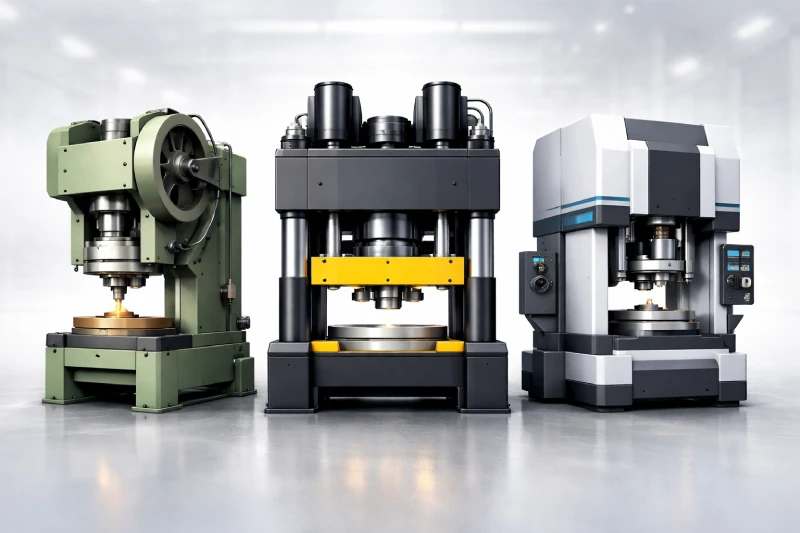
Below is a simplified comparison to help you quickly evaluate the main press types:
| Type | Speed | Precision | Flexibility | Best For |
|---|---|---|---|---|
| Mechanical | Very High | Medium | Low | Mass production |
| Hydraulic | Low–Medium | High | High | Deep drawing, complex forming |
| Servo | Medium–High | Very High | Very High | Advanced, precision manufacturing |
Key Takeaway
- Choose mechanical for speed
- Choose hydraulic for force control
- Choose servo for flexibility and precision
How to Choose the Right Type for Your Production Needs
While this is not a full buying guide, you can narrow down your options using three key factors:
1. Production Volume
- High volume → Mechanical press
- Low to medium volume → Hydraulic or servo press
2. Material & Forming Complexity
- Simple stamping → Mechanical
- Deep drawing or complex shapes → Hydraulic
- Multi-stage forming → Servo
3. Precision Requirements
- Standard tolerance → Mechanical
- High precision → Servo
- Controlled forming → Hydraulic
If you need a deeper evaluation framework, consider reviewing a dedicated stamping press buying guide for detailed specifications and cost considerations.
Conclusion: Matching Press Type to Manufacturing Strategy
There is no single “best” stamping press—only the one that best fits your production strategy.
- Mechanical presses deliver unmatched speed for mass production
- Hydraulic presses provide control for complex forming
- Servo presses offer flexibility for modern, precision-driven manufacturing
By understanding these classifications, you can make more informed decisions, reduce operational risks, and optimize your production efficiency.
Need Help Selecting the Right Stamping Press?
Choosing the right press type is only the first step. Factors like tonnage, tooling compatibility, automation integration, and long-term ROI also play a critical role.
If you’re evaluating stamping press solutions for your production line, consult with an experienced supplier to match the right machine type + configuration + application scenario.
A well-matched press doesn’t just improve output—it transforms your entire manufacturing workflow.
