
In modern manufacturing, speed alone is no longer enough—precision at high speed is what defines competitive production. This is where the high-speed stamping press becomes essential.
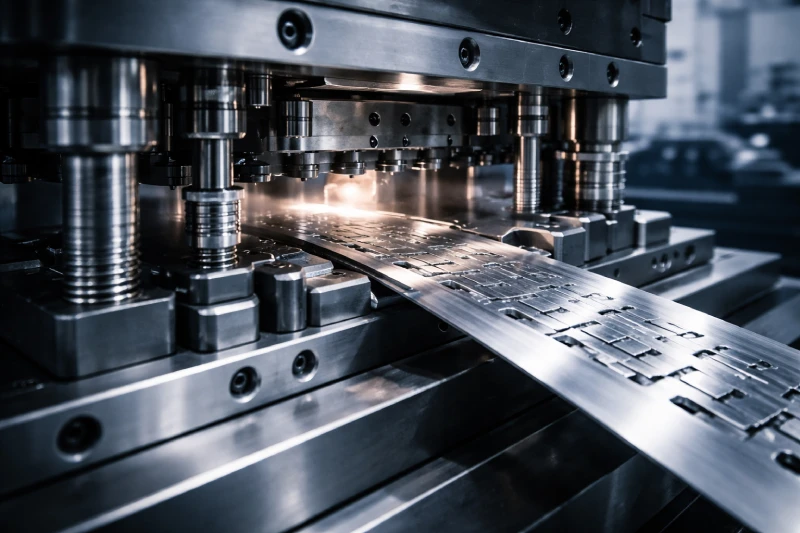
Unlike conventional presses designed for general forming, high-speed stamping presses are engineered for continuous, ultra-fast production of small, high-precision components. They are widely used in industries such as electronics, automotive connectors, and battery manufacturing—where output volume, dimensional consistency, and efficiency directly impact profitability.
If you’re evaluating whether your production line needs a high-speed press—or selecting one for your factory—this guide will walk you through key specifications, applications, and decision factors to ensure the right investment.
What Is a High-Speed Stamping Press? (Performance-Based Definition)
A high-speed stamping press is defined primarily by its stroke rate (SPM—strokes per minute) and its ability to maintain precision under continuous high-speed operation.
Typically, high-speed presses operate in the range of:
- 200 to 1,500+ SPM
- Designed for small, lightweight components
- Optimized for continuous coil-fed production
Unlike standard machines, the value of a high-speed press lies not just in speed—but in its ability to deliver consistent, repeatable accuracy at that speed.
Key Performance Characteristics of High-Speed Stamping Presses
High Stroke Rates (SPM)
The most obvious feature is speed. A higher SPM directly translates into:
- Increased output per hour
- Lower cost per part
- Better utilization of production lines
However, speed must be balanced with material behavior and tooling limits.
Precision and Repeatability
At high speeds, even minor deviations can lead to:
- Tool wear
- Product defects
- Feeding misalignment
High-speed presses are designed with:
- Tight slide guidance systems
- Minimal deflection structures
- High repeatability tolerance control
Continuous Operation Capability
These machines are built for long production runs with minimal downtime. Key design elements include:
- Advanced lubrication systems
- Thermal stability controls
- High-durability bearings and components
Vibration and Noise Control
Operating at hundreds or thousands of strokes per minute creates significant vibration. To counter this, high-speed presses feature:
- Rigid frame structures
- Balanced drive systems
- Vibration dampening designs
This ensures stable operation and longer machine life.
Typical Specifications You Must Evaluate Before Buying
Choosing the right high-speed stamping press requires understanding several critical specifications.
Tonnage Capacity vs Speed Trade-off
One of the most important realities:
Higher speed usually means lower tonnage capacity.
High-speed presses are typically designed for:
- Light to medium tonnage applications
- Thin materials
- Precision components
If your application requires heavy forming, a high-speed press may not be suitable.
Stroke Length and Slide Motion
Shorter stroke lengths allow:
- Faster cycle times
- Reduced inertia
- Better control at high speeds
This is why high-speed presses are ideal for small-part production.
Feeding System Compatibility
High-speed presses must work seamlessly with automated feeding systems, such as:
- Servo feeders
- Reel-to-reel systems
- Precision strip feeders
Feeding accuracy becomes critical at high SPM levels.
Die Compatibility and Precision Requirements
High-speed stamping relies heavily on:
- Progressive dies
- Multi-stage tooling systems
- High-precision die alignment
If your tooling is not optimized for high-speed operation, performance will suffer.
Common Applications of High-Speed Stamping Presses
High-speed presses are not universal machines—they are highly specialized for specific production environments.
Electronics and Connector Manufacturing
- IC lead frames
- Micro connectors
- Terminal components
These parts require:
- Tight tolerances
- High-volume output
- Consistent repeatability
Automotive Precision Components
Used for:
- Sensor components
- Electrical connectors
- Small metal parts
Battery and Energy Components
- EV battery contacts
- Thin metal plates
- Conductive components
High-speed presses enable mass production with uniform quality.
Medical Micro Parts
- Small precision metal parts
- Thin stainless steel components
Here, precision is even more critical than speed.
High-Speed vs Standard Stamping Press: What’s the Difference?
| Factor | High-Speed Stamping Press | Standard Stamping Press |
|---|---|---|
| Speed (SPM) | 200–1500+ | 20–200 |
| Precision | Very high | Moderate |
| Application | Small, precise parts | General forming |
| Tonnage | Lower | Higher |
| Cost | Higher initial investment | Lower upfront cost |
When Do You Actually Need a High-Speed Stamping Press?
Not every production line benefits from high-speed stamping.
You SHOULD consider it if:
- You have high-volume production requirements
- Your parts are small and precision-critical
- You use progressive dies
- You need low cost per unit at scale
You may NOT need it if:
- Production volume is low
- Parts are large or thick
- Forming requires high tonnage
- Flexibility is more important than speed
Choosing the wrong machine can lead to overinvestment or inefficiency.
Cost Considerations and ROI Analysis
High-speed stamping presses require significant investment—but they can deliver strong returns if used correctly.
Initial Investment
Costs typically include:
- Machine cost
- Tooling (progressive dies)
- Feeding systems
- Automation integration
High-speed systems are generally more expensive upfront.
Production Efficiency Gains
The main advantage is output:
- Higher SPM = more parts per hour
- Reduced labor cost per unit
- Increased production capacity
Cost Per Part Reduction
At scale, high-speed presses significantly reduce:
- Unit manufacturing cost
- Production cycle time
- Operational inefficiencies
Maintenance and Operating Costs
However, high speed introduces:
- Faster wear on components
- Increased maintenance frequency
- Need for high-quality lubrication and monitoring
A proper maintenance plan is essential.
How to Choose the Right High-Speed Stamping Press Supplier
Selecting the right supplier is just as important as choosing the machine.
Engineering Capability
Look for manufacturers that can:
- Customize machine design
- Match your tooling and production needs
- Provide technical support
Experience in High-Speed Applications
Not all press manufacturers specialize in high-speed systems. Prioritize suppliers with:
- Proven industry experience
- Case studies in similar applications
- Knowledge of precision manufacturing
After-Sales Support
Critical factors include:
- Spare parts availability
- Technical service
- Training and installation support
Customization and Integration
High-speed presses often require:
- Integration with automation lines
- Custom feeding systems
- Specialized control systems
Choose a supplier that can deliver a complete solution—not just a machine.
Final Checklist Before Buying a High-Speed Stamping Press
Before making your decision, confirm the following:
- Required SPM range
- Material thickness and type
- Part geometry and tolerance
- Tooling compatibility (progressive dies)
- Feeding and automation requirements
- Budget vs expected ROI
- Supplier capability and support
Conclusion: Is a High-Speed Stamping Press Worth It?
A high-speed stamping press is not just a faster machine—it is a precision production system designed for scale.
If your operation demands:
- High-volume output
- Tight tolerances
- Consistent product quality
Then investing in a high-speed press can significantly improve your efficiency, cost structure, and competitiveness.
However, the key to success lies in choosing the right machine, the right configuration, and the right supplier.
Need Help Selecting the Right High-Speed Stamping Press?
If you’re evaluating high-speed stamping solutions for your production line, we can help you:
- Analyze your application requirements
- Recommend suitable machine specifications
- Match you with the right manufacturing solution
👉 Contact us today to get a customized recommendation for your stamping operation.
